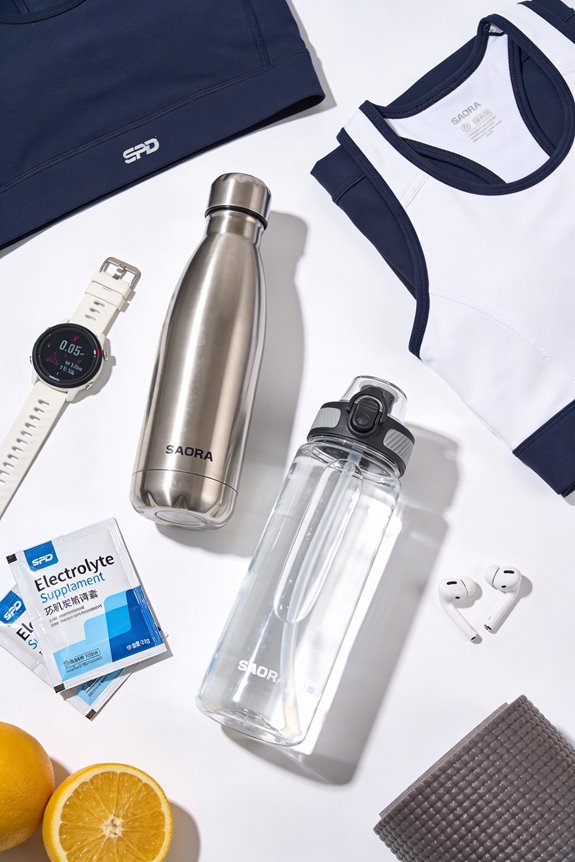

Hydration is essential for athletic performance; even a 2% decrease in body weight can impair strength, endurance, and power. It affects heart workload and cooling, leading to fatigue. We should drink 7-10 ounces of water every 10-20 minutes during exercise to stay hydrated. Electrolytes, like sodium and potassium, play a key role in fluid balance, helping prevent fatigue and cramps. By understanding our hydration needs, we can boost our performance considerably and optimize our activities as we learn more.
Key Takeaways
- Hydration is crucial for maintaining strength, power, and endurance; even a 2% body weight loss can impair performance significantly.
- Dehydration increases fatigue, muscle cramps, and dizziness, directly affecting an athlete’s overall capabilities and reaction times.
- Athletes should drink 16-20 ounces of water 2-3 hours before exercise and 7-10 ounces every 10-20 minutes during workouts.
- Electrolytes play a vital role in fluid balance and performance, preventing conditions like hyponatremia during strenuous activities.
- Personalized hydration strategies, including tracking sweat rates, enhance performance and reduce risks associated with dehydration.
The Essential Connection Between Hydration and Athletic Performance
Have you ever hit a wall during a workout and wondered what went wrong? Often, the answer is simple: hydration. When it comes to athletic performance, staying properly hydrated is crucial. Just losing 2% of your body weight from dehydration can majorly impact your strength, power, and endurance. It’s like trying to run a marathon with a flat tire—your body can’t perform at its best when it’s not fueled right.
Dehydration doesn’t just zap your energy; it messes with your heart, too. With less blood volume, your heart has to work harder to pump blood around your body. That’s the last thing you want during those intense training sessions. Have you checked your sweat rate recently? Knowing how much you sweat can really help you understand your fluid loss during workouts.
So, what’s the best practice here? Aim to drink 7-10 ounces of water every 10-20 minutes while you’re exercising. This isn’t just about quenching your thirst; it’s about keeping your body temperature in check and ensuring everything runs smoothly. If you don’t want to battle heat-related issues, keeping up with your hydration routine is key.
The best part is, prioritizing your hydration can set you up for success—helping you perform at your best and recover more effectively. Every drop counts when you’re pushing your limits in training or competition. So, the next time you lace up your shoes, ask yourself: Are you giving your body the hydration it needs? It could make all the difference in your athletic journey. Incorporating sustainable clothing made from breathable fabrics can also enhance comfort during hydration-intensive activities.
How Dehydration Impacts Physical Capabilities
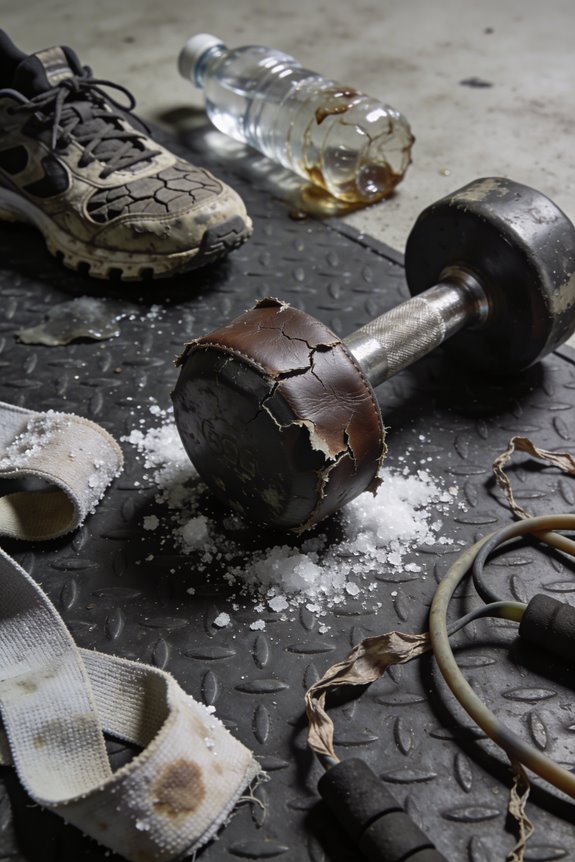
Have you ever felt drained during a workout without knowing why? You might be dealing with dehydration, and trust me, it’s a big deal for your performance. Just a 2% drop in your fluid levels can mess with your heart rate, making it tough to gauge how hard you’re pushing yourself. If that fluid loss climbs to over 4%, you’re really putting your heart under stress, which can seriously limit your overall performance.
For those of you who are endurance athletes, dehydration can really get in your way. It messes with your body’s ability to cool itself down, which means fatigue sets in way too early—even if your aerobic metabolism is still chugging along. No one wants to hit that wall faster than expected, right?
And let’s not forget about those pesky muscle cramps and stiffness. Inadequate hydration can lead to these issues, making your joints feel less mobile. The last thing you want is an injury that sidelines you.
So what can you do? Here’s the trick: make it a habit to check in on your hydration status regularly. Whether you’re training or competing, staying on top of your fluid intake can keep your performance in top shape.
In addition, wearing moisture-wicking fabrics can help manage sweat and keep you comfortable during workouts, aiding in effective hydration.
In the end, keeping hydrated is crucial for maintaining your physical capabilities, especially during intense workouts. How do you keep track of your hydration?
Recognizing and Responding to Dehydration Signs in Athletes

Have you ever hit a wall during a workout and wondered what went wrong? Dehydration might be the sneaky culprit behind that performance dip. Staying properly hydrated is absolutely crucial for athletes—did you know that losing just 5% of your body water can lead to a staggering 30% drop in your performance? It’s something we can’t afford to overlook.
Watch out for signs like increased fatigue, muscle cramps, dizziness, and dark-colored urine. These symptoms are your body’s way of waving a red flag, signaling that it’s time to rehydrate. A great rule of thumb is to regularly check the color of your urine. Aim for light yellow; that’s the sweet spot to show you’re in good shape.
Here’s something to think about: even a 2% drop in body weight can really mess with your reaction times and overall mood. It’s a reminder that consistent hydration during your workouts is vital. Make it a habit to sip fluids regularly, especially during intense training or competitions.
Truth is, when dehydration gets serious—like losing more than 4% of your body weight—it can wreak havoc on your cardiovascular function and derail your performance even further. You definitely don’t want to go there!
In the end, stay vigilant about hydration, and keep an eye on your body’s signals. Wearing high-waisted leggings with moisture-wicking properties can help keep you comfortable as you maintain proper hydration during your workouts. So, next time you’re out there pushing your limits, ask yourself: when did I last drink water? It might just make all the difference.
Effective Hydration Strategies for Enhanced Performance
Achieving the right hydration strategy can make a huge difference in how you perform. Ever feel like you just don’t have the energy during a workout? One key to fixing that might just be how well you’re hydrating. Start by drinking 16-20 ounces of water about 2-3 hours before you exercise. This will set you up for success.
During your workout, don’t forget to take small sips regularly—aim for about 7-10 ounces every 10-20 minutes. This helps counteract the water loss you’re facing, especially if you’re getting sweaty. And once you’re done? It’s super important to replace those lost fluids. A good rule of thumb is to drink 24 ounces of water for every pound you lost during your exercise.
Checking your hydration status can be easy. Just look at the color of your urine; pale yellow means you’re on track, while darker shades might be telling you to drink up. Honestly, staying hydrated isn’t just smart—it’s essential if you want to keep pushing your limits and improving your performance. Wearing breathable fabrics that wick moisture can also help regulate body temperature and maintain hydration levels during exercise.
How Electrolytes Support Hydration in Athletes
When we hit the gym or go for a run, it’s not just water we’re sweating out. We’re also losing crucial electrolytes like sodium, potassium, and chloride, which are super important for keeping our fluid levels balanced. Without these electrolytes, you could end up feeling sluggish or, worse, experience conditions like hyponatremia. This can seriously mess with both your performance and your health.
So, what’s the best way to combat this? Try rehydration strategies that include electrolyte-rich drinks or supplements, especially if you’re pushing your limits. Maintaining that balance is key to regulating nerve function and muscle contractions—both critical for endurance.
Here’s the trick: When you consume electrolytes along with water, it can actually enhance how well your body absorbs the water. This means you stay better hydrated, which supports everything from your stamina to your overall athletic performance. Who wouldn’t want that?
Honestly, think about your next workout. Are you prepared to not just hydrate, but also replenish those essential electrolytes? Making these small adjustments can make a big difference for your body. Remember, hydration isn’t just about water; it’s about balance.
Using gear like hydration packs with insulated bladders can further help maintain fluid temperature and improve hydration efficiency during workouts.
To sum it up, make sure you’re considering electrolytes in your hydration routine. It could be the boost you need to take your performance to the next level. How do you plan to hydrate during your next workout?
Hydration Needs: A Comparison Across Different Sports
Hydration needs can seriously vary based on the sport you’re diving into. If you’re into endurance workouts, you typically need around 2-4 liters of fluids a day. But if you’re more of a strength training enthusiast, your needs might only be 1-2 liters, depending on your body weight and how much you sweat. So, how do you know what’s right for you?
When it comes to high-intensity sports like football and soccer, staying hydrated is a must. Players can lose anywhere from 1-2 liters of sweat in an hour, and that’s definitely a lot. Keeping up with your hydration helps you avoid feeling sluggish and ensures optimal performance. Try to drink about 7-10 ounces of fluids every 10-20 minutes during your workout. Honestly, it makes a difference.
And don’t forget about electrolyte balance! That’s especially important in team sports. Sports drinks can be a handy way to get back lost sodium and fluids. It’s a simple way to keep your energy levels up and avoid any cramping that can throw a wrench in your game.
Recreational athletes should stick to basic hydration guidelines, but remember, your unique conditions matter. So, listen to your body. It’ll usually tell you when it’s time to hydrate.
In short, hydration isn’t one-size-fits-all. Whether you’re running long distances or playing a quick pick-up game, pay attention to how much you’re sweating and adjust your intake accordingly. What have you found works for you when it comes to staying hydrated?
Additionally, staying comfortable during physical activities can be enhanced by wearing breathable and lightweight clothing, such as open bottom sweatpants, which improve airflow and movement.
Tailoring Personalized Hydration Plans for Individual Athletes
How do you make sure your hydration plan really works for you as an athlete? It’s all about personalizing it to fit your unique needs. Start by thinking about your body weight, how much you sweat, and the intensity of your workouts. Using the Galpin equation can help you figure out the ideal amount of fluid you need based on your weight.
During your workouts, aim to sip on 7-10 ounces of water every 10-20 minutes. But here’s the trick: adjust that amount based on how much you sweat and the environment you’re in. For instance, if it’s super hot and humid, you might need a bit more. Feel like you’re not hydrating enough? Keep an eye on your urine color. If it’s light, you’re doing great. Dark means it’s time to hydrate more.
Also, pay attention to how your weight changes before and after your workouts. This can really help you refine your hydration strategy. Staying on top of this will not only boost your endurance but also keep fatigue at bay during those tough sessions. Choosing a BPA-free water bottle can help ensure safe and effective hydration throughout your training.
Hydration Best Practices for All Phases of Athletic Activity
Are you tired of feeling sluggish during your workouts? Proper hydration can make all the difference, and it’s key to nailing your performance every step of the way.
Start off right by drinking 16-20 ounces of water about 2-3 hours before you hit the gym. It’s all about getting your body prepped and ready. You don’t want to be starting off your exercise with low water levels—it’ll just drag you down.
Once you’re exercising, stay consistent with your fluid intake. Aim for about 7-10 ounces every 10-20 minutes, especially if it’s hot and humid outside. So, keep that water bottle handy! Otherwise, you might find yourself struggling to keep up.
After your workout, it’s all about recovery. A good rule of thumb is to drink 24 ounces of water for every pound you’ve lost during your session. This will help you bounce back quicker.
To check if you’re on top of your hydration game, just glance at your urine color. If it’s light yellow, you’re doing great! If it’s darker, it’s time to drink more water. So, why does this matter? Staying hydrated keeps you performing at your best and wards off fatigue.
Additionally, wearing breathable clothing with moisture-wicking properties can help manage sweat and improve comfort during workouts.
Ongoing Research: Future Trends in Athletic Hydration
Are you struggling to keep your hydration game on point during workouts? You’re definitely not alone. As more research rolls in, it’s becoming clear that having a personalized hydration plan can be a real boost to both your performance and safety. By focusing your hydration strategy around your unique sweat rates and the environment you’re in, you can keep dehydration at bay and enhance your endurance.
Did you know dehydration can drop your endurance capacity by up to 52%? That’s huge! So, it’s vital to stay on top of your fluid intake, especially when you’re pushing hard. Wearable devices are becoming super popular for tracking how much fluid you’re losing and monitoring your body temperature. These tools can really make a difference in understanding your hydration needs during rigorous activity.
Electrolytes play a big role, too. Balancing your electrolyte intake can help steer clear of conditions like hyponatremia, particularly during long endurance events. So, what’s the trick? Make sure you’re not just drinking water but including drinks that have electrolytes, especially during those longer workouts when you sweat more.
Truth is, hydration also affects how sharp your mind is. Studies show that being even slightly dehydrated can mess with your decision-making and reaction times. That’s definitely something you want to avoid, especially in competitive sports.
In addition to hydration, incorporating acupressure techniques during recovery can significantly enhance circulation and muscle relaxation, improving overall athletic performance and endurance.
Frequently Asked Questions
How Much Water Should I Drink Before Exercise?
We should aim for about 16-20 ounces of water two hours before exercise. Following pre exercise hydration guidelines, ideal water intake helps us perform better while also aiding hydration for endurance and recovery.
Does Coffee Affect Hydration Levels During Workouts?
Yes, coffee can affect hydration levels during workouts. It’s often misunderstood due to hydration myths. While caffeine absorption may impact electrolyte balance, moderate coffee consumption might actually enhance performance effects for many of us.
Can Hydration Impact Mental Performance in Athletes?
Yes, hydration greatly affects mental performance in athletes. Dehydration can lead to decreased cognitive function, increased performance anxiety, and lower concentration levels, amplifying mental fatigue. We should implement effective hydration strategies for ideal mental clarity during competition.
What Are the Signs of Overhydration?
We can all agree that overhydration isn’t as common as dehydration, but it’s vital to recognize signs like swelling, electrolyte imbalance, or performance decline, which can stress renal function. Smart hydration strategies keep water balance intact.
Is Bottled Water Better Than Tap Water for Hydration?
Bottled water can offer convenience factors and taste preference, but tap water’s transparency, cost comparison, and lower environmental impact make it a smart choice for many of us. Let’s weigh both options together for ideal hydration!