


Trail running and road running differ markedly in technique and gear. In trail running, we take shorter strides and focus on soft landings for stability on uneven terrain, generating more torque and power. Contrastingly, road running lets us maintain longer strides on flat surfaces, making energy management easier. For footwear, trail shoes have deep lugs and rock plates, while road shoes prioritize lighter cushioning. Selecting appropriate gear enhances comfort and performance, leading us to discover more essential tips.
Key Takeaways
- Trail running requires shorter, deliberate strides for stability on uneven terrain, while road running utilizes longer strides on flat surfaces.
- Trail runners focus on soft landings to absorb impact, whereas road runners emphasize maintaining a consistent stride for energy management.
- Terrain variations in trail running necessitate flexible pacing strategies, contrasting with the predictable pacing of road running on smooth paths.
- Trail shoes feature deeper lugs and rock plates for protection, while road shoes prioritize lighter cushioning and smoother outsoles for comfort.
- Both running types demand awareness of surroundings, but trail running involves additional safety considerations for hazards like wildlife and uneven ground.
Getting to Know Trail Running vs. Road Running Techniques
When you think about getting into running, have you considered whether to hit the trails or the pavement? Each style has its own quirks and challenges, and understanding these can make a big difference in your experience.
Trail running is all about balance and agility. You’re constantly navigating uneven ground, which means you need to keep your wits about you! That’s a far cry from road running, where you can generally just focus on keeping a consistent stride on flat surfaces. Did you know that trail runners create about 23% more torque and 16% more power? The varying elevations and rough terrain definitely demand more from your body.
Uphill sections? They’re a whole different beast. You’ll find that your muscles contract more powerfully but at a slower pace compared to the consistent rhythm of road running. It’s like a dance between effort and strategy. Even though the biomechanics are pretty similar in both styles, you’ll want to adjust how you place your feet and your pacing when faced with obstacles. And don’t forget, trail workouts often involve eccentric contractions, which help build strength differently than you’d find on the roads.
So, why does this matter? Knowing these differences can help you tailor your training to meet your goals. If you’re thinking about getting into trail running, be prepared for a challenge that’s as rewarding as it is tough.
In the end, whether you choose trails or roads, be mindful of the unique technical aspects each path brings. Wearing waterproof gaiters can enhance your trail running experience by protecting your feet from mud, rain, and debris. What’s your next move on your running journey?
Navigating Terrain: Key Differences in Foot Placement Techniques
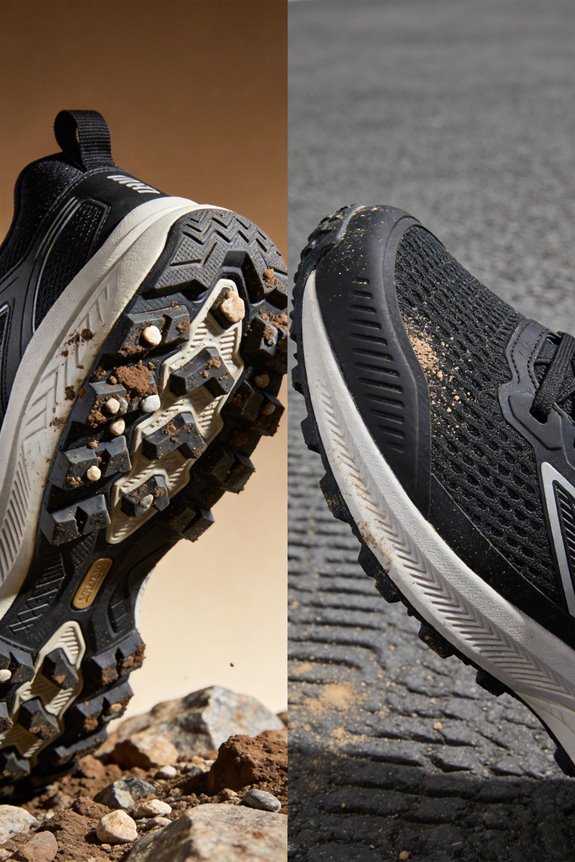
Navigating different terrains can be a real challenge, especially when it comes to foot placement techniques for runners. If you’re a trail runner, you know the struggle of uneven surfaces and those pesky rocks and roots. How do you keep your balance without tripping? The trick is to take shorter, more deliberate strides. This helps maintain stability and keeps you on your feet.
You’ll want to focus on a soft landing technique. This means having lighter footfalls to absorb impact, which can help prevent injuries. When you’re heading uphill, shift your posture slightly forward; this can really boost your propulsion. And when it’s time to head back down, try to descend in a controlled manner with quicker foot placements. This helps manage your speed and lets you navigate tricky terrain more easily.
On the flip side, road runners have it a bit easier when it comes to foot placement. With flat surfaces, consistent footfalls are key. You can safely maintain longer strides without worrying about obstacles. Standing upright optimizes your power output—no excessive adaptations are necessary here.
Additionally, ensuring the right support using bounce control technology can help maintain comfort and reduce injury risk during both trail and road running.
What’s the takeaway? Whether you’re hitting the trails or sticking to the road, understanding these techniques can make a big difference in your running experience. So, next time you lace up your shoes, think about your foot placement. Which technique are you going to try today?
Elevation Changes: How They Affect Your Technique and Pacing

Have you ever found yourself gasping for air while running uphill, wondering how you can keep your pace? Elevation changes can throw a wrench in your running rhythm, but understanding how to adapt can make all the difference.
When you’re tackling those inclines, your body starts to recruit different muscles. It’s not just about pushing harder; you need to tap into stronger muscle contractions, which tend to slow you down a bit. As the hill steepens, the energy costs go through the roof. That’s why it’s crucial to build strength endurance. Without this, your runs can quickly become a struggle, even if your aerobic fitness is on point.
So, how can you better your uphill game? Consider incorporating targeted uphill workouts into your routine. These sessions can help your muscles adapt to the demands of elevation gain. After a bit of practice, you’ll likely notice an improvement in your overall speed.
And let’s not forget about strategic pacing! Adjusting your effort according to the terrain changes is key. You want to maintain efficiency and stamina throughout your runs, right? By being mindful of your pacing, you’re not just grinding it out but running smart.
Using versatile workout tools like adjustable jump ropes can complement your training by enhancing cardiovascular fitness and leg strength.
Ultimately, keep in mind that running on varied terrain requires both strength and strategy. Embracing these elevation shifts can transform how you approach your runs. So next time you hit a hill, remember the work you’ve put in and give yourself permission to adjust your pace. How do you plan to tackle your next uphill challenge?
Choosing the Right Pacing Strategy: Trail vs. Road Running
Choosing the right pacing strategy for trail and road running can really make or break your performance. Have you ever felt like you’re just not hitting your stride when you switch from pavement to dirt? Road runners often enjoy a smooth, consistent surface that makes it easier to keep a steady pace and manage their energy. Most of them typically cover around 4.4 miles in a single run.
On the flip side, trail runners deal with a lot more to consider. Elevation changes, rocks, and roots all demand that you switch up your pacing, which can be a real challenge. Even though trail runners usually go a bit longer, averaging about 6 miles, they have to adapt quickly, especially in tricky spots and steep climbs. Hills require a different muscle game—you’ll want to engage those muscles for powerful contractions, but expect to slow down when you tackle those inclines.
So, why does this matter? Understanding these differences can help you make smart choices about your pacing strategy based on where you’re running. You might find that adapting your approach can help optimize your energy management and enhance your overall performance, whether you’re blazing down the trail or pounding the pavement. Choosing appropriate gear such as a sports bra with moisture-wicking fabric can also improve comfort and performance during your runs.
The Right Gear for Trail and Road Running
When you’re gearing up for a run, have you ever stopped to think about how much your shoes can affect the experience? The right footwear truly plays a huge role, especially when deciding between trails and pavement. Trail shoes are designed with deeper lugs, giving you that extra grip on those bumpy surfaces. On the flip side, road running shoes feature smoother outsoles, crafted specifically for those paved paths we love.
Trail shoes often boast stiffer midsoles, sometimes with rock plates, which serve as protection from sharp objects lurking on the trails. In stark contrast, road shoes focus on lighter cushioning to keep you comfortable on smooth surfaces. And let’s not forget about gusseted tongues in trail shoes—they’re great for keeping that pesky debris out. So, why does this matter? If you decide to use road running shoes on trails, expect quicker wear and tear. They simply can’t hold up against the rugged terrain that trail shoes are built to tackle.
To truly enjoy each run, it’s essential to pick the right footwear for your environment. Here’s the trick: think about where you’ll be running most often. Whether you’re drawn to the serene natural landscapes or the smooth city streets, using the correct type of shoe will help maximize your impact management and enhance your overall performance. Additionally, selecting appropriate gear such as lightweight, water-resistant nylon hiking pants can further improve comfort and protection when running on trails.
Safety Tips for Trail and Road Running
Ever thought about how you can stay safe while enjoying your run, whether it’s on a winding trail or a busy road? It’s something we all need to consider. For those hitting the trails, it’s a good idea to carry a small first aid kit. Minor injuries happen, and being prepared can make a difference. If you’re in a remote area, a satellite communicator can be a lifesaver if something goes wrong. Also, don’t forget to familiarize yourself with local hunting rules during the hunting season—trust me, it’s better to be safe than sorry.
Now, if you prefer running on the road, wearing reflective clothing is a no-brainer to improve visibility, especially when it gets dark out. You might want to carry a headlamp too, just in case you find yourself running early in the morning or at dusk. Have you ever considered who might need to know your running plans? Sharing those with a friend can really help in case of an emergency.
Staying aware of your surroundings is crucial, no matter where you run. Road runners should be respectful of pedestrians—they’re out there too! And for trail runners, it’s all about keeping an eye on the path ahead to avoid unexpected stumbles or falls.
Choosing gear with moisture-wicking properties can also enhance comfort and focus during your runs.
At the end of the day, safety should always come first. So next time you lace up, think about how you can be better prepared. What’s one safety tip you’ll take with you on your next run?
Frequently Asked Questions
How Does Trail Running Differ From Road Running?
Trail running differs from road running in terrain variation and elevation gain, requiring careful footing stability and navigation skills. We embrace pace adjustments, gear selection, and heightened mental focus, all while enjoying a scenic experience amidst weather considerations.
What Is the 80/20 Rule for Trail Running?
The 80/20 rule for trail running guides us to focus on endurance training, where we keep our heart rate low 80% of the time, allowing our pacing strategies to adapt to terrain variations and enhance injury prevention.
What’s Harder, Road Running or Trail Running?
We’d say trail running’s harder. The terrain challenges, elevation gain, and varied pace demand more mental focus. With injury risk and weather impact, it tests our stamina and gear choices in ways road running doesn’t.
What’s the Difference Between Trail Running and Running?
When we compare trail running to running, we see differences in terrain types, shoe selection, and pacing strategies. Elevation changes present unique injury risks, while community culture enhances our mental focus and training methods.


