
To create a balanced weekly training schedule, we should first define our fitness goals, like fat loss, muscle building, or improving endurance. Next, we should structure our workouts by including at least 150 minutes of moderate cardio along with strength training for major muscle groups twice a week. It’s important to integrate flexibility work and rest days to promote recovery. By regularly evaluating our progress, we can guarantee we’re staying on track and making necessary adjustments along the way. There’s much more to explore on optimizing your training regimen.
Key Takeaways
- Define specific fitness goals, such as fat loss or muscle building, to guide your training decisions.
- Structure your week with at least 150 minutes of cardio and two days of strength training targeting different muscle groups.
- Incorporate flexibility training and active recovery days to promote muscle recovery and injury prevention.
- Adjust your schedule every three to four weeks to maintain motivation and respond to progress monitoring.
- Use tools like journals or apps to track workouts and nutrition for personalized feedback and adjustments.
Define Your Specific Fitness Goals to Tailor Your Plan
Setting clear fitness goals is essential for creating a training plan that actually works. Think about what you want to achieve—are you aiming for fat loss, building muscle, or improving your endurance? Defining these goals isn’t just about getting motivated; it helps shape a workout routine that fits you.
For those focusing on fat loss, cardio will be your best friend. High-intensity interval training (HIIT) can really ramp up calorie burning and keep your workouts engaging. On the flip side, if building muscle is your priority, strength training should take the lead. A couple of sessions each week of progressive overload will go a long way.
Flexibility shouldn’t get lost in the shuffle, either. Including some stretching exercises can improve your overall performance and help prevent injuries. And don’t forget about recovery—your body needs time to rebuild after tough workouts, so plan for that in your schedule.
As you follow your workout routine, regularly check in on your progress. Are you getting stronger? Running longer? Feeling better overall? This is your chance to fine-tune your goals. Adjusting them based on your improvements keeps things fresh and motivating.
Additionally, wearing the right gear such as sports bras with bounce control technology can enhance comfort and support during high-impact workouts, keeping you focused on your fitness journey.
Structure Your Weekly Workout Schedule for Balance
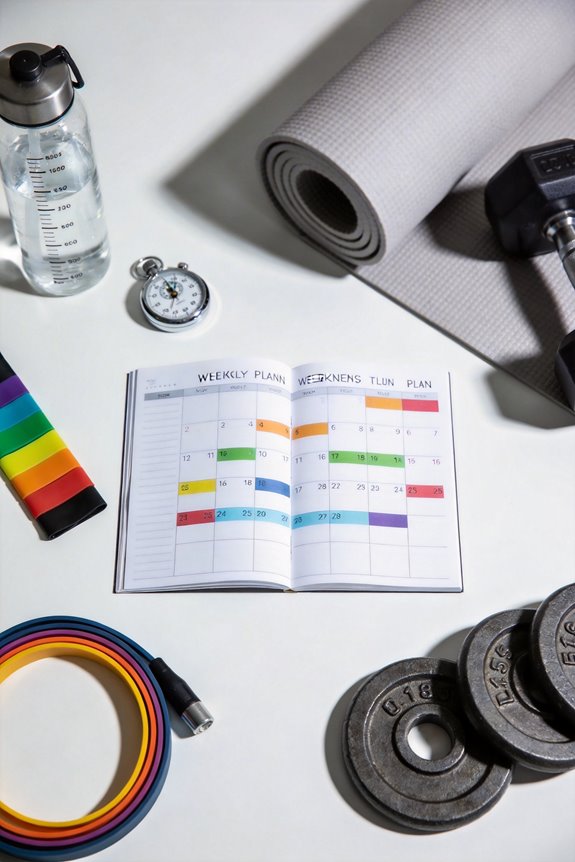
Struggling to figure out how to create a balanced workout schedule? You’re not alone! Many of us want to get fit, but it can feel overwhelming when you don’t know where to start.
Here’s the trick: aim for at least 150 minutes of moderate-intensity cardio each week. This could be as simple as jogging around the neighborhood or hopping on a bike. Spread that time across the week to make it feel manageable. Pair this with two days dedicated to strength training targeting major muscle groups. How about focusing on upper-body strength on Mondays and then lower-body strength on Tuesdays? This way, you’re hitting all the big areas.
Don’t forget about those much-needed recovery days, though! Giving your body time to rest is key to avoiding injury. Consider Sundays as a complete rest day and add in some dynamic stretching on Wednesdays. So, why does this matter? Consistency and variety are your best friends when it comes to staying engaged and responsive to your fitness level.
Another essential tip? Pay attention to your form during workouts. It’s easy to rush and miss the correct techniques. Also, switching up your routines every three to four weeks can keep things fresh and exciting. The best part is, it helps you avoid plateaus and keeps your body challenged. Staying properly hydrated with a hydration vest during exercise can significantly improve your performance and recovery.
Integrate Strength Training With Cardio for Best Results

Are you wondering how to combine strength training and cardio for the best results? It can be tough to figure out how to fit both into your busy schedule, but with a little planning, you can create a balanced routine.
Start by aiming for strength training two to three times a week. Focus on different muscle groups such as legs, back, and shoulders each time to give your body a chance to recover. You don’t want to overdo it and risk injury or fatigue.
Now, here’s the trick: aim for 150 minutes of moderate aerobic activity weekly. You can break that down into shorter sessions spread throughout the week, making it easier to stick to. And if you’re short on time, incorporate some high-intensity interval training (HIIT) in your routine. This can give you similar benefits to those longer cardio sessions, but in less time.
Think about your week like this: three days dedicated to strength workouts, two days of moderate cardio, and don’t forget one day for flexibility or active recovery. This way, you’ll engage all muscle groups while supporting your heart health. Honestly, who doesn’t want to be strong and healthy?
To maximize comfort and performance during workouts, consider wearing midweight base layers made from moisture-wicking fabrics that help regulate body temperature and maintain dryness.
How to Add Flexibility and Recovery Into Your Routine?
Adding flexibility and recovery into your routine is crucial if you want to boost your overall fitness and steer clear of injuries. Ever feel like your body just needs a good stretch or a break? You’re not alone! Making time for flexibility training is a no-brainer. Aim for at least three sessions a week—think yoga or good old-fashioned stretching. It enhances your mobility and cuts down on the chances of getting hurt.
Active recovery days are also key. Activities like leisurely walking or gentle swimming get your blood flowing and help with muscle recovery. If you’re warming up, throw in some dynamic stretches to get your body ready. Save those static stretches for after your workout when your muscles are warm and receptive. And hey, don’t skip that essential rest day—your body needs it to recover and rebuild.
It’s also important to listen to your body. Are you feeling tired or a bit sore? Don’t hesitate to squeeze in some recovery sessions. Balancing your workouts with rest and flexibility is the secret sauce to staying fit and feeling great. So, why not give it a try? You might just find it’s what your body has been craving. Incorporating tools made from high-carbon steel can improve durability and reliability in your fitness equipment, making your routine more effective and lasting longer.
Adapt Your Plan With Progress and Feedback
Have you ever hit a wall in your workout routine? It’s frustrating when your progress stalls, isn’t it? That’s where flexibility and recovery come into play. Adapting your training plan based on how you feel and what your body is telling you can make all the difference.
Regularly checking in on your performance can help spot when it’s time to tweak things up. Are you getting stronger? Does your endurance feel better? Or maybe your recovery times are improving? All these signs point towards the need for adjustments in your workout intensity, frequency, or even the exercises you’re doing.
Pay attention to your body as well. If you’re sore or feeling fatigued, that’s a signal to ease up and let yourself recover. There’s no benefit in pushing through and risking overtraining. It’s all about listening and responding to what your body needs to thrive. By switching up your workouts every few weeks, you’ll avoid those pesky plateaus and keep your motivation high as your fitness journey evolves.
Here’s the trick: use a journal or an app to track your workouts and meals. This not only helps you stay organized but also makes it easier to spot trends over time. So, why does this matter? It allows you to personalize your training plan, ensuring it fits your unique needs as you grow stronger and fitter. Incorporating the right gear, such as shoes with proper firm heel support, can also optimize your training effectiveness and reduce injury risk.
Frequently Asked Questions
How Do I Create a Balanced Workout Schedule?
Creating a balanced workout schedule is like crafting a delicious recipe; we should blend strength training, cardio balance, rest days, flexibility workouts, and recovery techniques, adapting for seasonal adjustments and injury prevention to achieve our goals.
What Is the 4 8 12 Rule?
The 4-8-12 rule’s philosophy promotes 4 strength training days, 8 cardio sessions, and 12 recovery days. Its benefits include balanced muscle recovery and motivation, dispelling myths, while offering various strategies, exercises, and guidelines for effective application.
What Is the 5-3-1 Rule?
Did you know 95% of lifters benefit from structured training? The 5-3-1 rule offers steady progression and tailored accessories, helping beginners tackle challenges while busting myths. With proper scheduling, we’ll see impressive results!
What Is the 2 2 2 Rule in Gym?
The 2 2 2 rule in the gym emphasizes two strength, cardio, and flexibility sessions weekly. Its benefits include balanced fitness, preventing monotony, and allowing adaptations based on individual needs, despite misconceptions about requirements for variations and frequency.