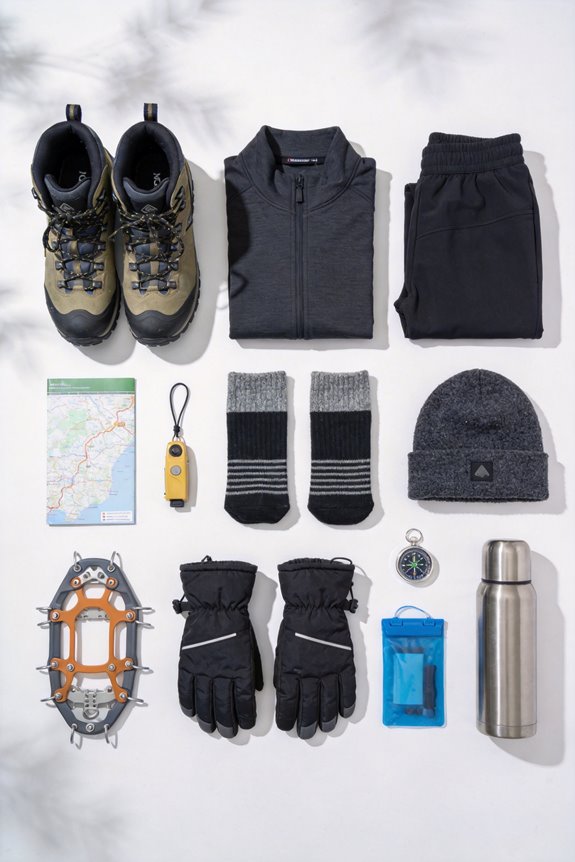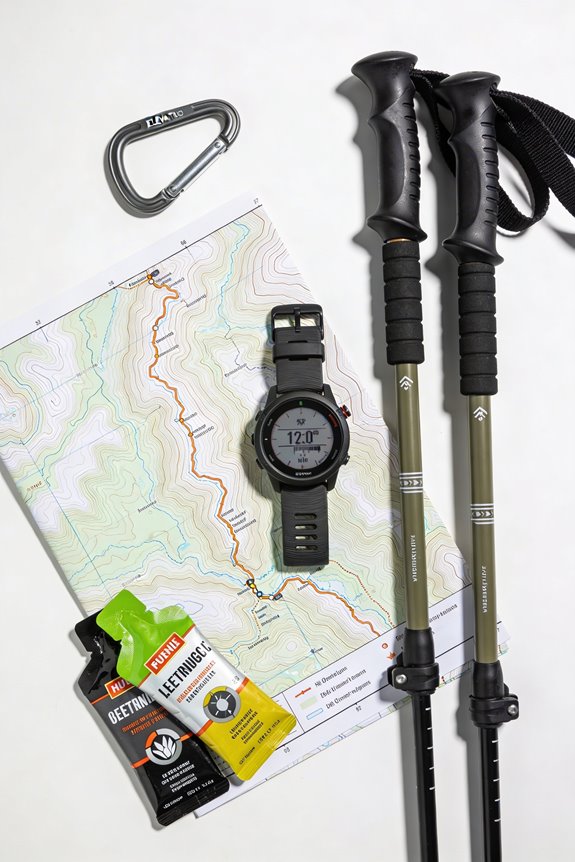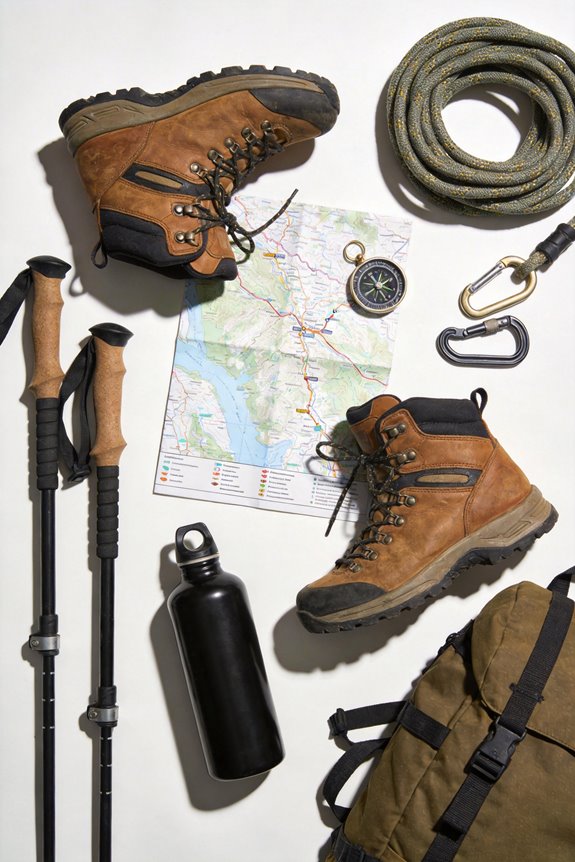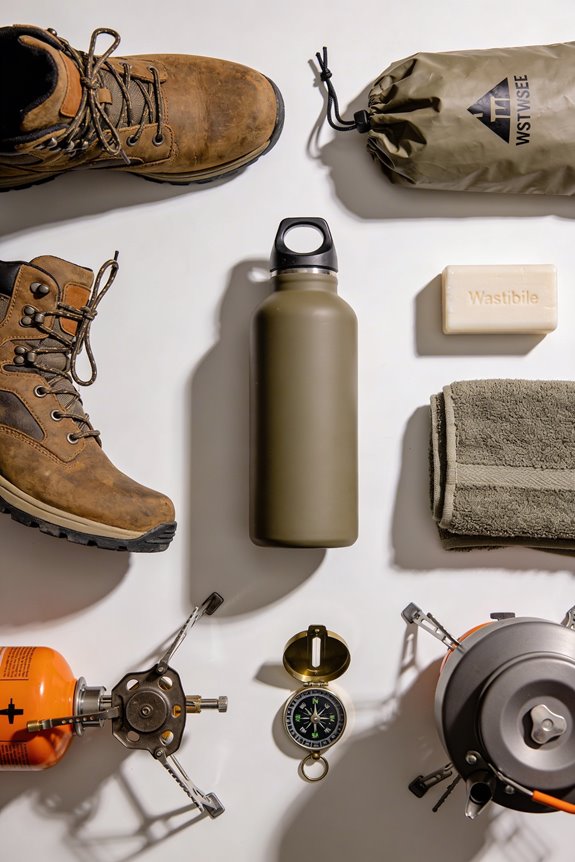

When we hike, we must follow Leave No Trace principles to protect our environment. We should plan ahead, travel on durable surfaces, and dispose of waste properly. Camp at least 200 feet from water sources and use camp stoves instead of fires when possible. Always keep wildlife at a distance, using bear-proof containers for our food. By respecting fellow hikers and getting involved in conservation, we guarantee nature remains untouched; there’s much more to explore in these principles.
Key Takeaways
- Plan ahead to understand trail conditions and potential challenges while sharing your itinerary with a friend or family member.
- Stay on established trails and durable surfaces to protect natural vegetation and minimize environmental impact.
- Dispose of waste properly by packing out all trash and using designated methods for human waste and food scraps.
- Respect wildlife by maintaining a safe distance, avoiding feeding, and securing food in bear-proof containers.
- Be considerate of other visitors by keeping noise levels low, yielding on narrow trails, and participating in conservation efforts.
Why Planning Is Key to Your Adventure
When planning a hiking trip, safety and enjoyment are top priorities. It’s important to check the weather forecast, as conditions can change quickly and unexpectedly. Ever been caught in a sudden downpour? You’ll want to be prepared. Having a detailed itinerary that you share with someone back home is also a smart move. This way, if things go sideways and you need assistance, someone knows where to look for you.
Understanding the terrain is a key part of your trip preparation. Knowing about potential hazards in the area can help to reduce your risk of accidents. Have you ever slipped on a rocky trail before? Knowing what to expect can enhance your overall experience. Don’t forget to pack the right gear, either. Think about including maps, a water purification system, and a first aid kit to handle those “just in case” moments.
Now, local regulations and permits are more than just paperwork. They’re there to help protect the environment. Nobody wants to see litter on a beautiful trail, right? By following these rules, you do your part in preserving nature and keeping the area clean for others. Here’s a tip: educate your friends and fellow hikers about these practices too; it fosters a culture of responsibility in outdoor adventures. Additionally, bringing lightweight and durable gear like adjustable yoga straps can enhance your flexibility and safety if you encounter challenging terrain.
Overview of Leave No Trace Principles
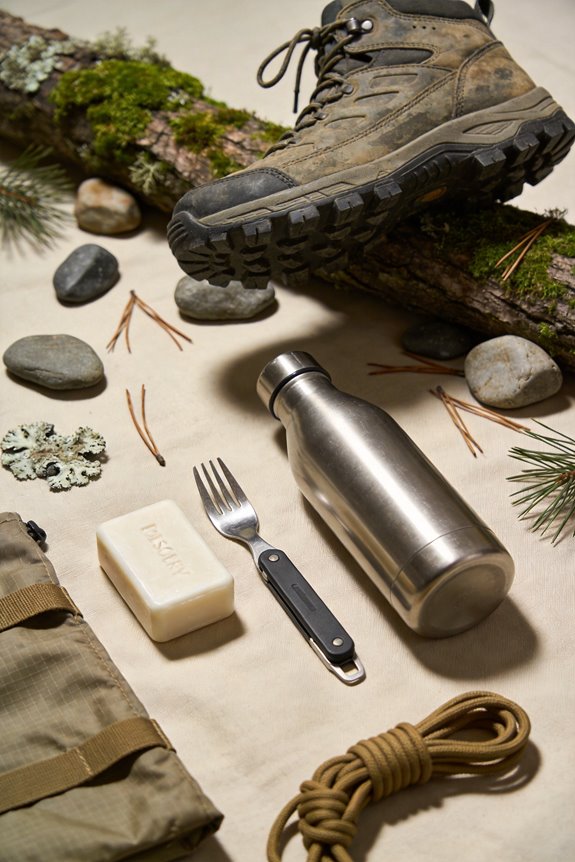
Have you ever hiked a beautiful trail only to stumble upon litter or hear loud conversations echoing through the trees? It can really ruin the vibe. That’s why we need to be mindful of how we enjoy the great outdoors.
The Leave No Trace principles are super handy for anyone who loves hiking or being in nature. They boil down to seven key tips that can make a big difference in minimizing our impacts. Here’s what to keep in mind:
- Plan Ahead: Know where you’re going and what to expect.
- Travel on Durable Surfaces: Stick to paths or established trails as much as possible.
- Dispose of Waste Properly: Always pack out what you bring in. Trust me; no one wants to see your snack wrappers on the trail.
- Respect Wildlife: Give animals space and don’t feed them. It keeps both you and them safe.
- Keep Noise Levels Down: Remember, nature is your soundtrack.
So, why does this matter? Each of these practices plays a role in preserving the beauty around us. When you do your part, you’re not just enjoying the moment; you’re also protecting the environment for future adventurers.
And don’t forget to respect fellow hikers, too. Yield the trail when you can and keep your chit-chat to a whisper. Not only is this courteous, but it also keeps that peaceful vibe alive.
Honestly, these straightforward actions can foster a culture of conservation that benefits us all. By following the Leave No Trace principles, you’ll find that you can enjoy your outdoor adventures while also taking care of the environment. Wearing lightweight waterproof rain pants can further reduce environmental impact by minimizing the need for multiple clothing changes and protecting you from weather without adding bulk.
How to Travel and Camp on Durable Surfaces

Ever noticed those worn paths in the woods? It’s a real bummer when our adventures leave a mark on nature. To keep the great outdoors looking beautiful, it’s important to travel and camp on durable surfaces. Stick to established trails and choose solid ground like rock, gravel, or grass whenever possible. This not only protects delicate plants but also stops new paths from forming.
When you’re setting up camp, try this: always set up at least 200 feet away from water sources. Why? It helps safeguard aquatic ecosystems and keeps the water clean for everyone. And if you find yourself trekking through muddy areas, don’t tiptoe around puddles—walk right through them. This helps narrow the trail instead of widening it.
Campfires can be cozy, but they also have a big impact, so be mindful. If you’ve gotta have one, keep it small and contained. That way, you’ll leave the place just how you found it—only footprints behind.
Choosing the right durable surfaces ensures minimal impact on natural areas and helps preserve them for future hikers.
Easy Ways to Dispose of Waste Properly
Where should you start when you’re out enjoying nature and thinking about proper waste disposal? It’s simple: remember the “pack it in, pack it out” rule. This means you need to bring all your trash, food scraps, and hygiene products back with you.
Now, let’s talk about human waste. If nature calls, you’ll need to dig a cat hole that’s 6-8 inches deep and at least 200 feet away from any water sources or trails. What if you’re in a sensitive area? Here’s the trick: using a Wag Bag is a must. It keeps your waste contained and makes it easier to pack out.
When you’re washing dishes, do it at least 200 feet away from any water sources and be sure to use biodegradable soap. By using less soap, you’re helping to protect the delicate aquatic ecosystems around you. Before you leave your campsite, take a moment to look around for any trash you might have missed. It’s a little effort that goes a long way.
Honesty, are you really doing your part to keep the great outdoors clean? It might seem like a small thing, but proper waste disposal can make a huge difference. For extended trips, using gear made with moisture-wicking materials can help maintain cleanliness and comfort. Next time you’re outdoors, remember these tips to keep our beautiful spaces clean and safe for everyone.
Leaving Nature As You Found It
When you head out into nature, do you ever think about how your visit could impact the environment? Leaving it just as you found it is super important. According to the Leave No Trace Center, one of the first things to remember is to keep your hands off natural items like rocks and plants. Removing them can mess with the ecosystem, so just leave it all in place.
When it comes to setting up camp, here’s the trick: camp on durable surfaces. This doesn’t just minimize your impact; it also protects the surrounding habitats. Try to pitch your tent at least 200 feet away from water sources, too. It’s a simple way to make a big difference.
Have you thought about the historical or archaeological sites you might come across? Preserve them for future visitors by taking only photos. It’s a small action with a big effect. Plus, be sure to pack out all your trash, including any leftover food. Keeping nature clean helps prevent wild animals from relying on human scraps.
And let’s talk wildlife. You wouldn’t want to disturb them, right? Observing from a distance and using a zoom lens is a great way to keep those creatures safe and sound.
Honestly, when you think about it, following these guidelines not only keeps the environment pristine but also enhances your outdoor experience. Using clothing with features like moisture-wicking fabrics can help you stay comfortable and focused on leaving no trace during your hike. So, the next time you’re out, remember: leaving nature as you found it isn’t just a rule; it’s a way to show respect. What steps will you take to leave a better trail behind?
Minimizing Campfire Impacts: Your Fire Safety Guide
After a long day of hiking, there’s nothing quite like gathering around a campfire under the stars. But what if I told you there are some important steps you can take to enjoy that warmth while keeping nature safe? Using common sense here is key. Whenever possible, go for a camp stove for cooking. Save those campfires for established fire rings in National Parks.
When it comes to the wood you’re burning, think small. Make sure you’re using only dead and downed wood, and keep it no larger than the size of your forearm. Once you’re done with the fire, here’s the trick: drown it with water and make sure it’s cool enough to touch before you leave.
So, why does this matter? Checking local fire regulations and keeping an eye on the weather can mean the difference between a cozy night or a dangerous wildfire. Especially during dry or windy periods, it’s a good idea to steer clear of open flames. And don’t forget: it’s your job to pack out all fire-related debris. Leaving a clean site means others can enjoy it just like you did.
Remember, outdoor activities demand moisture-wicking technology in your gear to keep you comfortable when the weather heats up or cools down.
In a nutshell, being mindful about your campfire helps protect the environment. So, next time you’re out camping, how will you ensure you’re leaving no trace behind?
How to Respect Wildlife While Hiking
How can we enjoy our hiking experience while being respectful to wildlife? One of the most important things to remember is to observe wildlife from a safe distance—aim for at least 100 yards. This not only keeps you safe but also reduces stress for the animals. It’s about respecting their space.
When it comes to food storage, bear-proof containers are a must-have. Not only do they keep your food safe, but they also prevent wildlife from getting too close by avoiding the temptation of easy meals. Don’t forget to secure all scented items, too. It might feel harmless to feed wild animals occasionally, but it actually disrupts their natural behavior and can lead to them depending on humans for food.
Then there’s the noise factor. Honestly, loud hiking can startle wildlife and disturb their natural habitat. Keeping the noise down helps maintain a peaceful atmosphere in nature, which, let’s face it, is part of why we go hiking in the first place.
If you do come across a wild animal, just stay calm. Back away slowly—don’t make sudden moves. The best part? Most wildlife isn’t interested in humans and will likely move along on their own. This is all part of respecting their routines.
Adhering to these principles is key as you enjoy the great outdoors. Practicing Leave No Trace ethics not only benefits you but helps protect our wildlife. Using proper gear like waterproof clothing also ensures that you are prepared for changing weather without impacting the environment. So next time you’re out hiking, consider how these little actions can make a big difference. What will you do on your next adventure to respect the wildlife around you?
Being Considerate of Other Visitors in Nature
As you wander through nature, have you ever noticed how sometimes, it feels a bit crowded? It’s a common issue, but being considerate of others can really enhance everyone’s experience. Keeping noise levels down is a simple way to help. Imagine walking to the sounds of birds singing instead of loud conversations; it really allows you to soak in the peacefulness around you.
When you’re on the trails, think about the hikers coming uphill. Yielding to them not only shows respect but helps keep the flow moving smoothly on those narrow paths. It’s a nice gesture that keeps the vibe friendly and makes the hike enjoyable for everyone involved.
Speaking of etiquette, good campground manners go a long way. Cleaning up your site and respecting fellow campers’ space can make a world of difference. Nobody likes feeling cramped or dealing with someone else’s mess. Plus, remember to stick to local trail guidelines, especially when it comes to pets. Why? Because everyone’s there for the same reason – to enjoy the outdoors!
Try this: Keep a safe distance from other groups. It reduces overcrowding and creates a more pleasant atmosphere. Also, dressing in layers with proper moisture-wicking fabrics helps you stay comfortable and focus on your surroundings rather than the cold. So, the next time you’re out, take a moment to think about how you can make the experience better not just for you, but for everyone around you.
Get Involved: Ways to Support Conservation Efforts
Have you ever felt frustrated by trash left on your favorite hiking trail? It’s frustrating, right? The good news is that each of us can play a part in fixing this. Getting involved in conservation efforts not only makes our outdoor experiences more pleasant but also helps protect the beautiful environments we love.
One way to dive in is by joining local cleanup events. These gatherings are a fantastic chance to remove litter from trails, which directly improves the health of ecosystems. Plus, the scenery becomes way more enjoyable when it’s free of trash.
Another hands-on approach is volunteering for trail maintenance projects. Not only do these efforts help us preserve existing pathways, but they also enhance our outdoor adventures for everyone. If you’re not sure where to start, look into conservation organizations. Support them financially or through advocacy—every little bit counts in their mission to protect wildlife and habitats.
Community education programs are also a great resource. For instance, the Center for Outdoor Ethics offers handy info on Leave No Trace principles, which help spread awareness about caring for the environment. You might be surprised at how many people don’t know these basics!
And let’s not forget about social media. Use your platforms to promote conservation initiatives and share your experiences. Create a buzz that inspires fellow outdoor enthusiasts to join in stewardship activities.
Additionally, wearing UPF 50+ protective clothing while hiking can reduce environmental impact by minimizing the need for chemical sunscreens that can harm ecosystems.
Frequently Asked Questions
What Should I Do if I Encounter Aggressive Wildlife?
If we encounter aggressive wildlife, we should remain calm and back away slowly. Knowing wildlife behavior is key; we must use safety measures like making noise and carrying bear spray. Emergency response plans are essential for everyone’s safety.
Are There Specific Leave No Trace Guidelines for Winter Hiking?
Yes, there are guidelines for winter hiking! We should prioritize trail safety, wear appropriate winter gear, stay aware of snowpack conditions, and watch for ice hazards to guarantee a safe and responsible outdoor experience.
How Can I Educate My Children on Leave No Trace Principles?
We can educate our children on Leave No Trace by organizing outdoor activities, using interactive games, hosting nature scavenger hunts, and incorporating storytelling sessions that highlight respect for nature and the importance of conservation.
What Are the Consequences of Not Following Leave No Trace Principles?
If we ignore Leave No Trace principles, we risk catastrophic environmental impact, face serious legal repercussions, endanger wildlife, and contribute to trail degradation. We must protect nature for future generations, or it could vanish forever!
How Do I Find Local Leave No Trace Workshops or Events?
We can find local workshops and community events by checking online resources, visiting park program websites, or connecting with outdoor clubs. Let’s start exploring together; we’ll discover valuable opportunities to learn and engage!