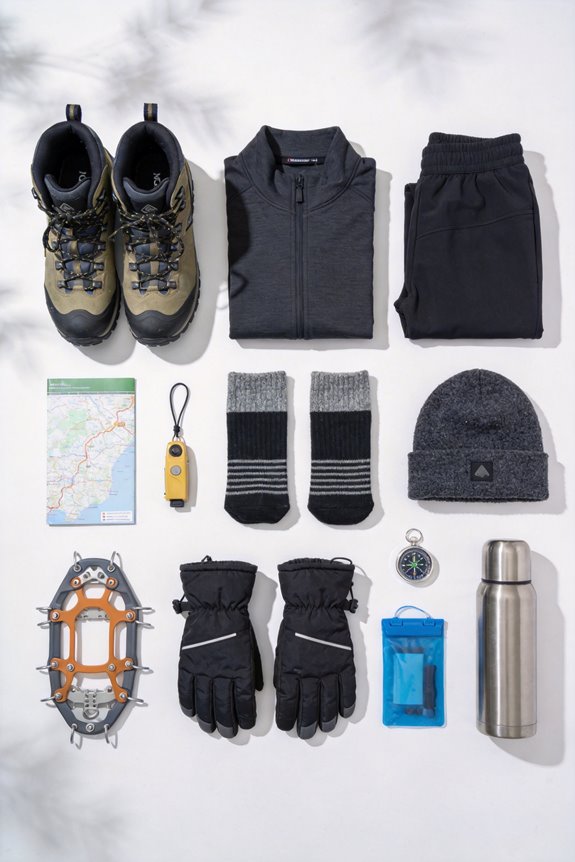

To stay safe while winter hiking, we should wear layering systems made of moisture-wicking materials like merino wool for base layers, followed by insulated jackets with 200 grams of down, finished with waterproof GORE-TEX outer layers. We must also choose insulated, waterproof boots for warmth and grip on icy trails. Carrying an insulated water bottle and high-energy snacks, like trail mix, helps maintain hydration and energy during the hike. This sets the foundation for a more thorough approach.
Key Takeaways
- Check the weather forecast and current trail conditions to prepare for unexpected changes and hidden obstacles.
- Wear insulated, waterproof boots and dress in moisture-wicking base layers to keep warm and dry.
- Carry a well-stocked first aid kit and emergency gear, including an emergency blanket for unexpected situations.
- Familiarize yourself with navigation skills, using maps or GPS, to stay oriented in snow-covered terrain.
- Share your hiking plan with someone and hike with a group, maintaining a consistent pace and communication for safety.
Essential Preparations for Safe Winter Hiking
If you love hiking, winter can be a tricky time. The colder temperatures and changing weather conditions can make things much more challenging. So, how do you keep yourself safe while still enjoying the great outdoors? Here are some essential steps to follow that will help make your winter hiking experience safer and more enjoyable.
First off, always check the weather forecast. Patterns can change rapidly when you’re out in the wilderness, and being caught in a snowstorm is nobody’s idea of a good time. You don’t want to end up somewhere cold and bleak when the sun goes down.
Next, gear up properly. This isn’t just about looking good on the trails; it’s about staying warm and safe. Here’s what you should pack:
- Waterproof boots made from GORE-TEX
- Insulated layers (aim for at least 200 grams of fleece or down)
- Traction devices like microspikes for those icy spots on the trails.
This combination can make a huge difference in your comfort level. Wearing insulated hiking pants can provide the necessary warmth and waterproof protection to maintain comfort during cold, wet conditions.
Planning your hike is crucial, especially in the winter when daylight hours are shorter. You want to ensure you’re back before sunset. Trust me, getting caught out in the dark with snow all around isn’t fun. So, try mapping your route ahead of time to gauge how long it will take you and stick to your plan.
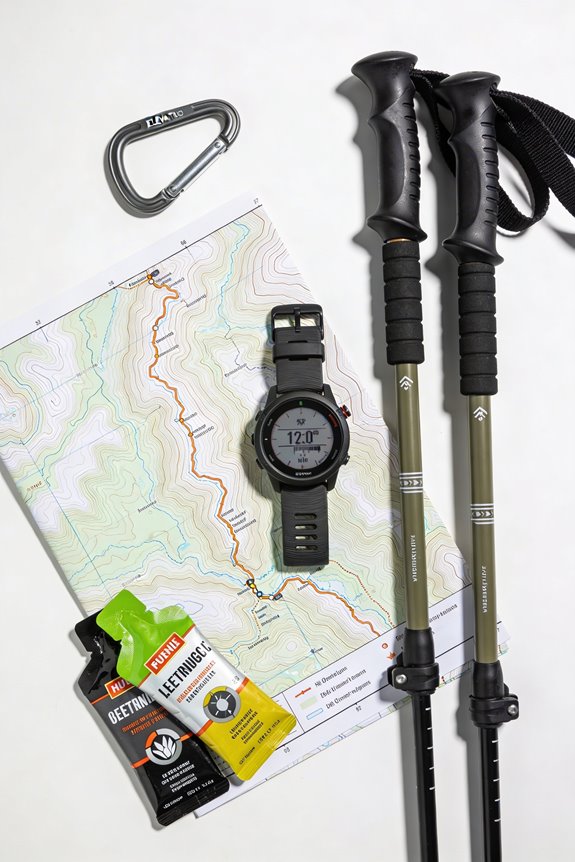
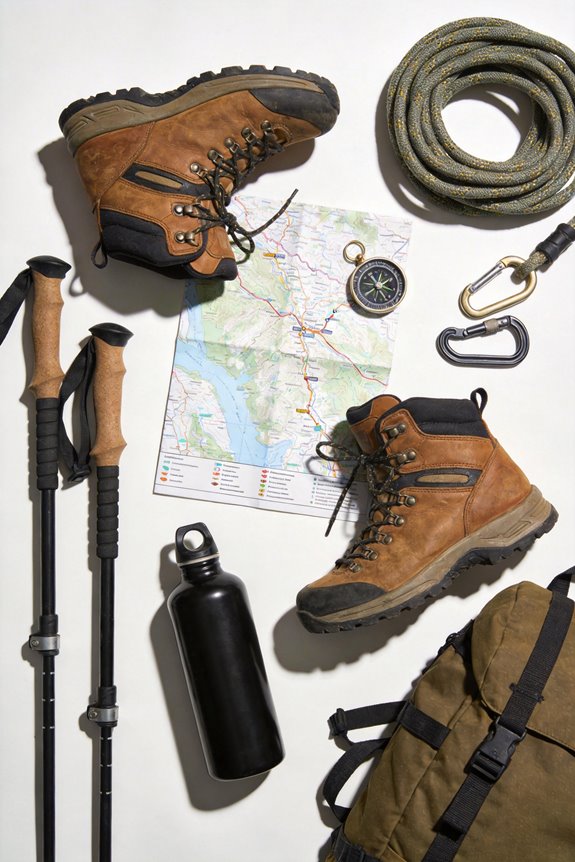
And don’t forget about navigation tools! Carrying a map and compass or a GPS device is super important when the trails are covered in snow. They might not be as clear as you’re used to, and relying on trail signs can sometimes lead you astray.
Finally, share your hiking plan with someone who’s not going with you. It’s a simple yet effective way to add an extra layer of safety. If something unexpected happens, at least someone knows where you are supposed to be.
Hydration and Nutrition Tips for Winter Hiking
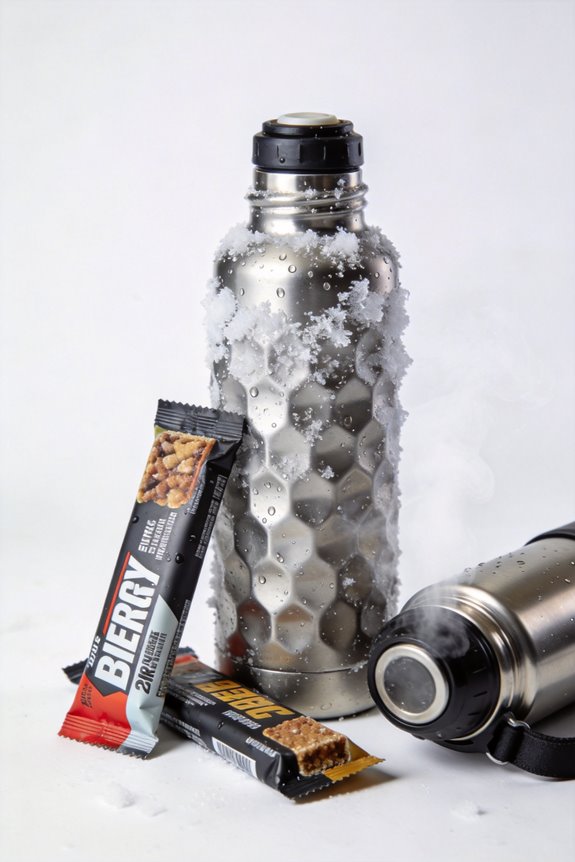
Staying hydrated and nourished on winter hikes is key to keeping your energy and focus sharp. It’s easy to forget to drink water when it’s cold outside, but dehydration can sneak up on you even in chilly weather. Make sure to carry an insulated water bottle to keep your drink from freezing—it really makes a difference.
Now, let’s talk snacks. It’s a good idea to pack salty treats like nuts or trail mix. Not only do they taste great, but they also help replenish those essential electrolytes. The right snacks can keep your energy levels stable, so you don’t hit a wall halfway through your hike. Going for high-energy foods like energy bars or dried fruits is smart, too. Your body burns more calories when it’s cold, so having the right fuel on hand is crucial.
Before you step out, don’t skip a hearty meal—think oatmeal or a filling sandwich. This fuels you up for the trek ahead. And keep those snacks accessible! There’s nothing worse than fumbling around for food when you really need it.
Also, don’t forget to pack both plain water and electrolyte drinks. It’s about listening to your body’s needs during those long hikes. So, here’s the trick: if you stay hydrated and eat well, you’ll enjoy your hike a lot more. Wearing moisture-wicking fabrics can also help manage sweat and keep you comfortable throughout your journey.
Layering Clothing for Cold Weather Comfort

Winter hikes can be a blast, but let’s be real – staying warm is key! It’s all about layering your clothes properly to keep your body feeling just right no matter how cold it gets.
Start with a moisture-wicking base layer. Think of materials like merino wool or synthetic fibers; they pull sweat from your skin, keeping you dry. After that, you’ll want some insulation. Fleece or down jackets are great options for trapping heat and delivering that cozy warmth we all crave on chilly days.
Now, let’s talk about the outer layer. This is where you want something that’s waterproof or windproof. It acts as your shield against harsh weather, whether it’s biting wind, rain, or snow.
Here’s the trick: this three-layer system not only boosts your comfort but also helps prevent hypothermia. Adjusting your layers based on your activity level or sudden weather changes becomes super easy! So, why does this matter? Because being warm makes all the difference between a fun adventure and a miserable hike. Choosing the right base layer with thermal support can significantly improve your overall insulation and comfort.
Essential Winter Hiking Gear You Need
Ever been on a winter hike and felt that chill creeping through your shoes? It’s one of the worst feelings when your feet get cold and wet. To combat this, start with insulated, waterproof boots. They’re not just for keeping your feet dry; they also offer crucial ankle support and grip on those slippery trails.
Layering your clothing is super important when hiking in the winter. A moisture-wicking base layer made from synthetic fabric is a good idea since it helps manage any sweat you work up. Next, go for an insulating fleece layer to keep the warmth in. Finally, add a waterproof, windproof outer layer to fend off the biting wind and snow. So, why does this matter? The right layering keeps you comfortable and focused on the views instead of your discomfort.
Now, let’s talk about traction. If you’re walking on icy paths, traction devices like microspikes or snowshoes can make a world of difference. They really help improve grip and prevent slips. Also, don’t overlook the accessories; having insulated gloves, a warm hat, and hand warmers will keep your body heat in check and protect your fingers and ears from the cold.
Honestly, investing in good winter hiking gear is worth it. Choosing waterproof and insulated outerwear with features like fleece lining is key to maintaining warmth and comfort. You want to enjoy the beauty of winter without the distraction of discomfort. Remember, it’s all about staying warm and safe out there! What’s your go-to gear for winter hikes?
Navigating Winter Trails: Key Strategies
When you’re out on winter trails, dealing with icy paths and hidden obstacles can really throw a wrench in your plans. So, how do you stay on track? Start by getting to know the prominent landmarks around you. They can really help in those snow-covered landscapes where everything starts to blend together.
Navigation apps like Gaia GPS are handy to have, too. They provide real-time updates on weather and trail conditions, which is crucial as the weather can change quickly. But let’s not kid ourselves; you can’t just rely on these apps or trail markings. Knowing how to read a map and use a compass is a must—trust me, it’s a skill that could save you in a pinch.
Before you hit the trails, take a moment to check the current trail conditions. Ice can sneakily hide paths that you’ve taken before, making it more treacherous than expected. And don’t forget about safety! Carrying a well-stocked first aid kit and some emergency gear can make all the difference if you run into unexpected issues or weather changes.
Also, dressing in layers with moisture-wicking fabrics helps manage sweat and keep you warm without overheating during exertion.
Recognizing and Responding to Winter Hazards
As winter rolls in, it’s easy to underestimate the potential hazards lurking in the cold. Hypothermia often sneaks up on folks, and you might find yourself shivering or feeling confused before you even realize what’s happening. If you notice these symptoms, act fast—get to a warmer spot and warm up immediately.
Frostbite is another danger we can’t ignore. It usually targets fingers, toes, and those sensitive ears, making them numb and discolored. The trick here is to warm those areas up quickly. If it’s really cold, you might want to rethink your plan to be outside for too long.
Icy conditions can be tricky. That thin layer of ice might look solid, but it can go from safe to dangerous in a heartbeat. Seriously, avoid walking on ice that doesn’t look trustworthy—better safe than sorry!
And let’s not forget about avalanches if you’re hitting the mountainous areas this winter. It’s crucial to stay updated on forecasts and conditions before you head out.
Wildlife is another concern. Animals can be more aggressive in the winter, often due to hunger or protecting their territory. So, how can you stay safe while hiking? Keep your distance and don’t approach them.
Wearing waterproof rain pants can help protect you from snow and moisture, keeping you dry and comfortable during winter hikes.
To sum it up, being aware of these winter hazards is key to enjoying the season safely. What’s your go-to tactic for dealing with winter conditions?
Tips for Safe Group Hiking
Ever gone on a hike with a group and felt like things got a bit chaotic? It happens! To keep your hiking experience smooth and safe, it’s super important to recognize everyone in the group’s strengths and limitations. Why not choose a designated leader to help navigate? This way, you can also ensure there’s clear communication throughout your adventure.
Keeping a consistent pace is key. Check in regularly with each other—how’s everyone feeling? Are certain members getting tired? A simple “You good?” can go a long way in making sure everyone is comfortable.
If you’re heading out in snowy or icy conditions, layer up! Here’s the trick: wear a moisture-wicking base layer, an insulating mid-layer, and finish with a waterproof outer layer. This combo will help keep you warm and dry, which is what you want on those chilly hikes.
Don’t underestimate the importance of hydration and snacks. Pack plenty of water, and consider trail mix or energy bars for a quick pick-me-up on the trail. Staying fueled will help keep energy levels steady among the group.
Lastly, having extra emergency gear can be a lifesaver. Bring along some first aid supplies. Truth is, it never hurts to be prepared for surprises when you’re in the great outdoors.
Choosing workout pants made of moisture-wicking materials can improve comfort during physical activity in cold weather.
To sum it all up, prioritize communication, stay layered, and be prepared. What’s your go-to hiking tip that keeps the group happy and safe?
Be Ready for Winter Emergencies
Being prepared for winter emergencies is crucial when you’re heading out on a hiking trip. Picture this: you’re out in the wild, and suddenly the weather takes a turn for the worse. What do you do? That’s why packing a robust emergency kit is a must. You’ll want to include a first aid kit, extra food, plenty of water, and materials to start a fire. These essentials can make all the difference if unexpected challenges arise.
Don’t underestimate the importance of recognizing the signs of cold-related injuries. Frostbite and hypothermia can sneak up on you before you know it. Symptoms can escalate quickly, and knowing what to look for can help you take action before things get really serious. Plus, carrying an emergency blanket or a bivvy sack can keep you warm if you ever find yourself in a sticky situation out there.
And let’s talk about the basics: always share your trip itinerary with a trusted friend or family member. This way, if you don’t return when expected, they’ll know to raise the alarm. It’s a small step that could potentially save your life.
Before you set out, definitely check the avalanche conditions, too, especially if you’re hiking in mountainous areas. You wouldn’t want to think you’re just going for a walk when, in fact, the slopes are dangerous.
Also, consider bringing a waterproof military rain poncho for its versatility and added protection against the elements.
Post-Hike Reflections
After a hike, have you ever wondered how to make the most out of that experience? Reflecting on what happened not only keeps the memories fresh but also helps improve your skills for the next adventure. Consider putting together a group debriefing session—trust me, it’s worth it. When you share your experiences, you get a better sense of how your gear performed, especially when hiking in winter conditions.
Make sure to jot down all the trip details. Here’s the trick: note the trail conditions, the weather, and any other relevant info. This creates a handy reference for your future hikes and can save you some headaches down the road. Discuss any safety issues you faced during the hike, too. Collectively tackling these challenges leads to better ways of managing risks in the future.
Don’t underestimate the importance of reflecting on your physical and mental experiences either. How did you feel out there? Understanding your own limits helps shape your confidence in winter hiking. And just a quick reminder: keep a log of all your winter outings, including the highs and lows. It can be motivating to look back at how much you’ve grown and learned from each trek.
For optimal comfort during cold weather hikes, consider wearing compression shorts with moisture-wicking and support features to enhance performance and recovery.
Embracing the Unique Experience of Winter Hiking
Ever thought about what winter hiking can do for you? It’s like stepping into a different world where your usual trails become beautifully blanketed in snow. The quiet that fills the air and the sight of sparkling white surroundings is a refreshing break from the buzz of daily life.
Staying warm is key during these chilly adventures. Here’s the trick: dress in layers made from moisture-wicking fabrics, like polyester or merino wool. An insulated jacket, whether it’s down or synthetic, keeps your core warm, and waterproof pants are essential to keep the wet snow from soaking through. And don’t forget your feet! Insulated, waterproof boots with solid traction will make sure you stay steady and slip-free on those icy paths.
As you hike through the snow, it’s easy to appreciate the stillness that winter offers. Honestly, there’s something magical about being out there when everything is serene and peaceful. Embracing winter hiking not only strengthens your body but also helps you connect deeply with nature in its quiet, beautiful forms. Choosing a base layer with moisture-wicking capabilities will help regulate your body temperature and keep you comfortable throughout your hike.
Frequently Asked Questions
What Should I Do if I Get Lost in Winter Conditions?
If we get lost in winter, let’s use navigation techniques like a map and compass, follow staying warm guidelines by layering up, signal for help with bright colors, and guarantee we’ve got essentials to carry.
Can Hiking During Winter Impact Trail Visibility?
Yes, hiking in winter can considerably impact trail visibility. With snow cover hiding trail conditions and requiring proper winter gear, we must adapt our navigation strategies to overcome visibility challenges and guarantee a safe adventure.
Are There Specific Trails Recommended for Novice Winter Hikers?
Think of winter hiking as a dance with nature. For novice hikers, some beginner-friendly hikes include well-marked trails like those in national parks. Always use proper safety gear essentials and follow recommended winter hiking tips!
How Do I Manage My Energy Levels During Longer Hikes?
To manage our energy levels during longer hikes, we can use effective energy conservation strategies, stay hydrated, employ pacing techniques, and recognize signs of fatigue. These tips keep us energized and enjoying every step of the journey.
What Emergency Equipment Should I Carry While Winter Hiking?
We should always carry a first aid kit, navigation tools, thermal blankets, and signaling devices when winter hiking. These items guarantee we’re prepared for emergencies, keeping us safe while we enjoy the adventure outdoors.