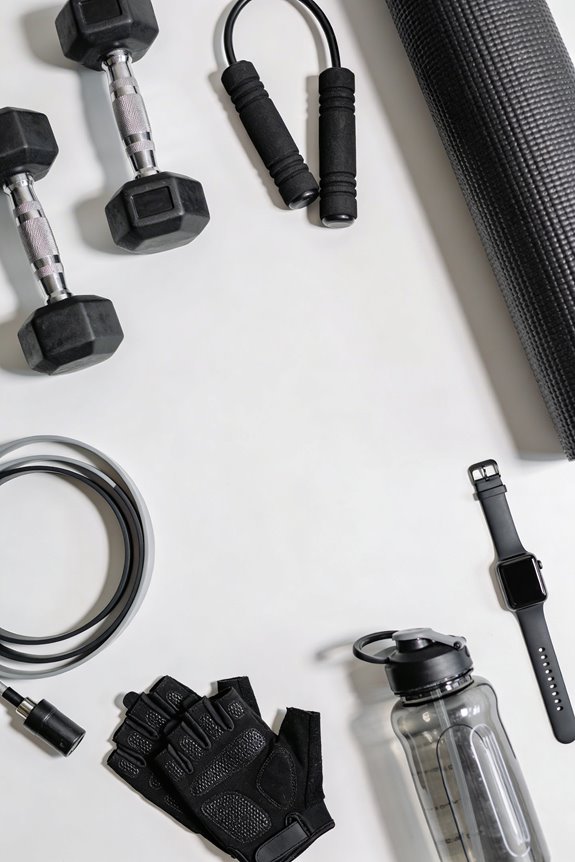
To break through a strength training plateau, we should adopt a multi-faceted approach: First, let’s challenge our muscles by adding 5-10% more weight or trying lower reps with heavier weights. Next, we can shorten our rest times to 30-45 seconds and incorporate drop sets or supersets. Nutrition is crucial; we need to guarantee sufficient protein intake and stay hydrated. Finally, adequate recovery days are essential for muscle repair. We’ll explore more strategies to invigorate our workouts.
Key Takeaways
- Regularly assess performance metrics every 4-6 weeks to identify stagnation and make necessary adjustments to training plans.
- Incorporate varied strategies like increasing weight by 5-10%, lowering repetitions, or using drop sets to challenge muscles.
- Ensure adequate recovery time, incorporating rest days and active recovery, to support muscle repair and rebuild strength.
- Improve nutrition by tracking protein intake and meal timing to enhance recovery and boost performance during workouts.
- Consider consulting a certified personal trainer for tailored advice and new strategies to overcome plateaus effectively.
What Is a Strength Training Plateau and How Can You Identify One?
What’s the deal with strength training plateaus? It’s that frustrating phase when you’re working hard but not seeing any gains in your weightlifting or muscle-building efforts. You might feel stuck, and that’s not a fun place to be.
So, how do you spot a plateau? Here are some telltale signs to look for:
- You struggle to lift heavier weights or increase your reps.
- Your performance metrics, like how much you can lift, seem frozen in time.
- You might even feel bored or frustrated with your routine.
That’s the thing with strength training; it’s all about progress. Regularly checking in on your performance is key. Pay attention to the weights you’re lifting, the intensity of your workouts, and your overall motivation.
Muscle adaptation is real. When your body gets used to the same exercises over and over, things can stall. What can you do about it? It’s vital to ensure you’re recovering well, mixing up your exercises, and eating right to keep up with your training needs.
Many folks don’t realize that even subtle changes can make a difference. Here’s the trick: if you see those signs of stagnation, make some tweaks to your routine ASAP. Whether it’s adjusting your weights, trying new exercises, or even taking a break, a little change can reignite that spark.
In addition, incorporating durable and functional gear can support your training sessions by providing comfort and utility, which helps maintain focus during workouts.
In short, recognizing a plateau early is important for breaking through and getting back on track. So, what are your next steps to kickstart your progress again?
What Causes Strength Training Plateaus?

Ever feel like you’re hitting a wall with your strength training? It can be super frustrating when you’re putting in the work but not seeing results. Let’s explore some reasons this might be happening and how you can break through that plateau.
One big reason is that you’re not challenging your muscles enough. If you’re sticking to the same weights and routines, your body gets used to it, and that’s when progress stalls. Here’s the trick: try gradually increasing your weights or changing your exercises to keep your muscles guessing. You might also want to experiment with different rep ranges.
Another thing to consider is your form. If you’re not using the right technique, you might not be engaging your muscles properly. This can lead to injuries too, so getting your form right is crucial. You could ask a trainer for a quick check or even record yourself while working out.
Recovery is just as important as the workout itself. If you’re pushing yourself every day without taking rest days, your body might be too fatigued to grow stronger. Poor nutrition can also play a role here. Make sure you’re fueling your body with the right nutrients and taking time to rest—your muscles need it!
Using workout tools with ergonomic features and comfort can help reduce strain and improve your training effectiveness.
Regularly assessing your performance can make a huge difference, too. Pay attention to how you feel and make changes as needed. This keeps your training fresh and effective.
In recap, plateaus happen for a reason. You just need to make a few adjustments to get back on track. So, what’s one change you’re willing to try this week to shake things up?
Effective Strategies to Boost Your Training Intensity

Feeling stuck in your training? You’re not alone. Hitting a plateau can be frustrating, but boosting your workout intensity might just be the answer.
Start by adding some weight to your lifts—just 5-10% can make a noticeable difference. It’s not about making huge jumps; even small increases create a tougher challenge for your muscles. If you’re used to doing a lot of reps, try switching things up by lowering your repetitions and lifting heavier. This change maintains the intensity and can help you break through those frustrating plateaus.
Next, consider shortening your rest times between sets. Cutting your breaks down to 30-45 seconds can ramp up the intensity and keep your heart pumping. You might be surprised at how much harder you can push yourself with just a little less downtime. Here’s the trick: adding techniques like drop sets or supersets can really help take your workout to the next level.
Don’t forget to check in on your training progress regularly. Every 4-6 weeks, take a moment to assess what you’ve been doing. This isn’t just about checking off boxes. It’s a key part of applying progressive overload, which is essential for continual growth and improvement.
Simply put, don’t let yourself get too comfortable. Mix things up, challenge yourself, and keep it fresh! What’s one change you can make to amp up your next workout?
How to Vary Your Exercise Routine for Better Results
Are you feeling stuck in your exercise routine? It’s a common struggle. When you repeat the same workouts over and over, it’s easy to hit a plateau. The good news is that freshening things up can help you break through and keep your progress moving forward.
Try mixing in different training formats—circuit training or supersets, for example. These methods increase your workout intensity and can really get those muscles engaged. Switching between free weights and machines is another smart move. It not only keeps things interesting but also helps activate those stabilizer muscles that you may not be targeting otherwise.
Here’s the trick: small changes can lead to big results. Consider altering your grip on exercises like the bench press. Switching from a standard grip to a close grip can hit different muscle fibers and keep your body guessing. Have you ever tried multi-muscle group exercises like kettlebell swings? They’re a fantastic way to enhance your overall workout efficiency.
Truth is, mixing up your routine isn’t just about adding variety. Periodization is a concept worth considering. This means cycling through phases of heavy lifting, hypertrophy, and endurance. Doing this can truly challenge your body and help you hit those specific fitness goals you’re aiming for.
To support your varied routine, choosing workout pants with moisture-wicking materials can keep you comfortable and focused during all types of training.
It’s essential to keep your workouts fresh to maintain that momentum. So, how do you plan to switch things up this week? Stay curious and keep experimenting with your routine!
Nutrition and Recovery: Key to Overcoming Plateaus
Have you ever hit a plateau in your workouts and felt completely stuck? It’s frustrating when you’re putting in the effort but not seeing progress. Here’s the thing: while hitting the gym is crucial, what you eat and how you recover can have a big impact on breaking through those barriers.
Proper nutrition is a must, especially when it comes to your protein intake. So many people don’t realize how much protein their bodies need for muscle recovery and growth. If you’re not meeting those needs, your progress could really be limited. And let’s not forget about hydration—staying hydrated not only helps you recover faster but also keeps you energized during workouts.
Now, about those pre-workout meals: make sure you’re including the right amount of carbohydrates. Balanced meals can give you the energy boost you need, especially for high-intensity training sessions. Trust me, it can make a world of difference.
Recovery days are just as important as workout days. Think about including active recovery days or scheduled de-load weeks into your routine. These practices allow your muscles to repair and allow your energy stores to bounce back, critical for ongoing progress.
So, how do you keep track of your nutrition habits? Monitor your meal timing and the nutrients you’re consuming. Understanding your patterns will help you see what might be holding you back and where you can make some changes for better performance and recovery.
In short, remember that both nutrition and recovery are key players in overcoming plateaus. Have you created a plan to tweak your diet or recovery? What little changes could you try today? Wearing moisture-wicking clothing that offers moisture-wicking properties can also help maintain comfort and focus during intense workouts.
Identifying the Right Time to Seek Help for Strength Training Plateaus?
How do you know when it’s time to get help with those pesky strength training plateaus? You might find yourself stuck—maybe you haven’t been able to increase your weights or reps for a month or more. That’s a solid clue that something isn’t right. If the frustration of not seeing progress starts to creep in, it can really dampen your enthusiasm for working out. Talking to a certified personal trainer could be just what you need to reignite that spark.
Have you tried mixing things up with different exercises or changing your rest strategies but still aren’t seeing any gains? It might be time to get some expert advice. You don’t want to keep banging your head against the wall. Plus, keep an eye out for signs of overtraining. Bad form or pushing too hard can lead to injuries, and nobody wants that.
Here’s the deal: getting help isn’t just about improving muscle performance; it can also set you on the right path for sustainable weight loss strategies. Incorporating adequate recovery and temperature regulation techniques, such as wearing insulating Merino wool, can support muscle repair and overall workout comfort.
Frequently Asked Questions
How to Get Out of a Plateau in Weight Lifting?
To get out of a weightlifting plateau, we should incorporate progressive overload, introduce workout variety, adjust our diet, refine technique, focus on mental clarity, set clear goals, guarantee adequate rest periods, and utilize effective recovery strategies.
What Is the 2 2 2 Rule in Gym?
The 2 2 2 rule means we increase weights by 2.5 to 5 pounds after hitting two extra reps for two workouts. It’s a great gym progression method to enhance our strength training strategies and maintain workout routine balance.
How to Shock Your Body Out of a Plateau?
Did you know about 70% of gym-goers hit plateaus? To shock our bodies, we can mix in explosive movements, progressive overload, cross training, and dynamic effort with varied intensity, plus new exercises and strategic rest techniques.
What Is the 5-3-1 Rule?
The 5-3-1 program helps us optimize workout progression through strength cycles, using training percentages. By incorporating lifting variations, we enhance results, while appropriate rest periods and mental focus aid in effective goal setting.