
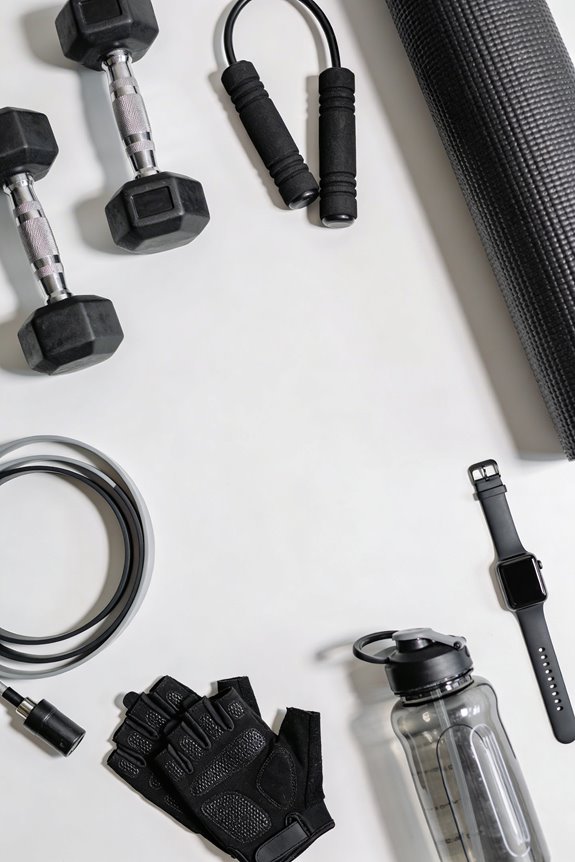

To structure our first month at the gym, we should start by defining clear fitness goals, such as losing weight or building strength. Next, we’ll create a flexible workout schedule, aiming for at least three days a week. In Week 1, we’ll familiarize ourselves with the gym and engage in light workouts, gradually increasing intensity in Week 2 with strength training and cardio routines. We also need to track our progress beyond just weight, ensuring we stay on track as we advance. There’s more to explore about sustaining motivation and enhancing our experience.
Key Takeaways
- Start by defining clear fitness goals and write them down for accountability and tracking progress throughout the month.
- Create a flexible workout schedule, aiming for at least three exercise days while balancing strength training, cardio, and recovery.
- Begin with light workouts to familiarize yourself with gym equipment and gradually incorporate full-body strength routines twice a week.
- Mix in various exercises to maintain engagement and consistently log your workouts to monitor progress and adjust goals as needed.
- Prioritize recovery days to allow your body to heal and prevent burnout, enhancing overall performance and mental well-being.
Define Your Fitness Goals for Immediate Success
Starting your fitness journey can feel overwhelming, right? It’s tough to know where to begin, but figuring out your goals can actually give you that boost you need. When you set clear and achievable targets—like wanting to lose a certain number of pounds or build strength—you can really amp up your motivation.
Consider coming up with both short-term and long-term goals. For instance, maybe you want to commit to working out three times a week for the month ahead. From there, you might want to prepare for a 5K or set a weightlifting goal by the end of the year. And don’t just keep those goals in your head—write them down! Tracking your progress not only holds you accountable, but it also feels great to see yourself improve over time.
Mixing types of goals can also be helpful. Think about how you can enhance your performance with a balanced workout routine while still focusing on your overall health, like getting enough sleep. Honestly, reaching out to supportive friends or joining a group can make a real difference too. Having people around you who share similar goals helps keep you on track and committed. Additionally, having the right equipment and accessories like a quality gym bag can make your fitness routine more organized and enjoyable.
Create a Flexible Workout Schedule That Fits Your Lifestyle

When it comes to fitting workouts into a busy life, it can be a real challenge, can’t it? After you’ve set your fitness goals, the next step is to create a workout schedule that meshes well with your daily routine. Start by mapping out your week. Set aside at least three dedicated days for exercise, but don’t stress if those days have to shift now and then.
A flexible workout schedule is crucial for staying engaged. Mixing things up with strength training, cardio, or group classes can break the monotony and keep you motivated. Don’t forget about rest days; they’re necessary for your muscles to recover. On those lighter days, consider activities like walking or yoga to keep moving without overdoing it.
Try this: use mobile apps or digital calendars to set reminders for your workouts. These can be really helpful in keeping you accountable. But let’s face it—life can be unpredictable. Some weeks might be crazier than others, and you may find yourself needing to adjust your schedule. In those moments, a quick at-home workout can save the day.
Wearing comfortable, supportive gear such as high-waisted leggings can enhance your workout experience by providing tummy control and stability during movement.
Week 1: Familiarizing Yourself With the Gym Environment

Have you ever walked into a gym and felt completely out of place? That overwhelming feeling is totally normal, especially if it’s your first week. This week is all about getting comfortable in your new surroundings. Start by checking out the gym layout—make a mental note of where the cardio machines, weights, and locker rooms are located.
Consistency is vital. Aim to hit the gym at least three times this week. During these visits, keep things light: 20 to 30 minutes of cardio or some basic exercises like bodyweight squats or push-ups will do just fine. This way, you’ll adapt to the routine without feeling overly sore afterward. Remember, it’s all about easing into it.
And don’t hesitate to ask the gym staff for help. They’re there for a reason and can show you how to use the machines properly or explain any questions you might have. This is a golden opportunity to get comfortable with everything available to you. Wearing lightweight, breathable fabrics can also enhance your comfort and performance as you get started.
Create Your First Workout Routine After Week 1
Creating a workout routine might feel overwhelming at first. You might be wondering where to start or how to make it effective. The good news is, with a simple plan, you can set up a solid program that works for you. Let’s set up a full-body workout focusing on strength training two to three times a week.
Incorporate movements like squats for your lower body, push-ups for your chest and arms, and rows to build overall strength. These are foundational exercises that pack a punch. You’ll also want to think about including some light to moderate cardio on the days you’re not lifting weights. About 10 to 20 minutes should do the trick to keep your endurance up.
Another tip? Consistency is key. Try scheduling your workouts on the same days each week, like Monday, Wednesday, and Friday. This helps your body recover and gets you in the groove. Plus, keeping a workout log can be super helpful. It’s a great way to see how you’re improving and decide when to increase your weights or reps.
As you dive in, remember to focus on your form. This is crucial for building a strong foundation. So, why does this matter? Because solid technique isn’t just about lifting heavier; it’s about staying safe and preventing injuries.
Additionally, wearing proper footwear with adequate cushioning and support can make a significant difference in your workout comfort and injury prevention.
To wrap it up, starting a workout routine may feel like a challenge, but with a bit of planning and consistency, you can achieve great things. Are you ready to take the plunge and see what you’re capable of?
Week 2: Establish Strength Training and Cardio Routines
As we dive into Week 2, many of us might wonder how to take what we started last week and build on it. This week, it’s all about setting up your strength training routine. You don’t need to complicate things; just focus on fundamental movements like squats, hinges, pushes, pulls, and core work. Aim for two full-body workouts this week, and as you get more comfortable, consider bumping up the weights or reps.
Now, let’s not forget about cardio. Adding balanced cardio routines is key to improving your overall fitness. Gradually work towards 20-30 minutes of activity on machines like treadmills, ellipticals, or stationary bikes. So, why does this matter? By increasing your cardio time, you’re also enhancing your stamina, which can boost your performance in strength training.
Don’t forget to give yourself some recovery time! It’s crucial to rest at least one day between strength workouts to let those muscles heal and get stronger. Keeping a workout log can also be super helpful. Watching your progress can motivate you and keep you on track as you adjust to this new routine. For added comfort and support during high-impact sessions, make sure you wear a properly fitted high-impact sports bra.
Increase Intensity and Explore New Workout Formats
Do you ever feel like you hit a wall in your workout routine? As you dive into week three at the gym, it’s time to push yourself a bit harder. This is when you can start cranking up the intensity of your sessions, and believe me, it can make a world of difference.
To do this safely, you don’t have to go overboard. Just consider adding some weights or pushing for a few more repetitions—whatever feels right for you. It’s all about listening to your body and adjusting based on how you’re progressing.
Don’t forget to shake things up! Exploring different workout formats can keep boredom at bay. Consider trying out circuit training or joining a class you’ve never done before. This variety not only keeps your routine exciting but might also help you discover new exercises you actually enjoy.
Log your workouts, too; this simple practice allows you to track your progress. You can see how far you’ve come and adjust your goals as needed. Staying consistent with 3-4 workouts each week while focusing on your form is key. It helps you minimize the risk of injury and can actually boost your performance.
So, why does this matter? Because gradually increasing intensity leads to real growth in your fitness. Remember, it’s not about racing to the finish line; it’s about steady, sustainable improvements.
Also, wearing compression elbow sleeves can provide support and stability during weightlifting, reducing discomfort and helping you maintain proper form.
Just get out there, try something new, and challenge yourself. What’s the next workout format you’re excited to explore?
Why You Can’t Skip Recovery Days
Have you ever pushed hard in the gym and then felt completely wiped out the next day? It’s easy to think that if you just keep going, you’ll see better results faster. Truth is, recovery days are just as important as those intense workout sessions. They’re the time your body gets to repair itself, fixing those tiny tears in your muscles so they can grow back stronger.
When you skip these crucial recovery days, it can really backfire. Overtraining can happen, leading to fatigue and lower performance. That’s definitely not what you’re after. Instead, giving yourself a break allows your energy levels to bounce back and helps clear out toxins from your system. It’s like hitting the reset button for your body, readying you for your next workout.
Here’s the trick: prioritize your rest. When you do, not only do you help your muscles recover, but you also support your mental health. Nobody wants to deal with burnout, and regular time off keeps your motivation high. Studies show that those who take their rest seriously often perform better and manage stress more effectively than those who don’t.
So, why does this matter to you? If you want to see real progress, understanding the value of recovery days is key. It’s about finding that balance between pushing yourself and letting your body heal. Using protective products like anti-chafe balms during workouts can also help maintain skin comfort and prevent irritation, supporting your overall recovery process.
Track Your Progress Beyond the Scale
Tracking progress in the gym isn’t just about the number on the scale. It’s much deeper than that! There are so many ways to measure your fitness journey that will give you a clearer picture of your overall health.
Start by keeping tabs on the weights and reps for your workouts. Doing this not only shows you how you’re getting stronger but can also keep you motivated to push a little harder. Don’t forget about the other important things, like your energy levels, sleep quality, and changes in mood. These aspects can reflect your wellness in ways the scale doesn’t.
Want to see your hard work paying off? Try taking body measurements and snapping progress photos every few weeks. It’s amazing what a visual comparison can show you about muscle gain and fat loss over time. And hey, if you’re keeping a fitness journal, don’t just focus on workouts. Jot down improvements in your cardiovascular endurance, flexibility, and how you perform basic movements. This broader perspective can make a big difference.
So, why does this matter? Recognizing your progress in all its forms can help you stay committed even when the number on the scale isn’t budging. It’s all about feeling good in your skin and knowing that you’re on the right track.
To wrap it up, tracking your fitness journey requires a holistic approach. Think about everything: strength gains, wellness markers, and the way your body looks and feels. Including recovery tools like compression socks can further enhance your progress by supporting improved circulation and muscle healing. What’s a new way you can track your progress today?
How to Sustain Your Motivation After Your First Month?
How do you keep that initial spark of motivation alive after your first month at the gym? It can be tough, right? Once the excitement wears off, it’s easy to slip back into old habits. But don’t worry, there are simple strategies that can help keep you fired up.
First up, it’s time to set specific, achievable goals. Instead of saying you just want to “get fit,” consider aiming to lift heavier weights or complete more reps. This gives your workouts a clear direction and keeps things fresh.
Trying group classes or finding a workout buddy can also add some fun and accountability to your routine. Having someone alongside you can make the process more enjoyable and keep you motivated on those days when you’re feeling low.
Tracking your progress is vital, too. Keep a log of your workouts, and soon enough, you’ll be able to see just how much stronger and more enduring you’re becoming. It’s amazing how much simply seeing that progress can boost your motivation.
And let’s face it, doing the same routine over and over can get boring. So, switch things up! Explore new exercises or different types of equipment. The best part is, you might discover something you really love.
Finally, don’t forget to celebrate those small victories! Whether it’s completing a tough workout or hitting a new personal best, each step forward is worth recognizing. So, why does this matter? Because reinforcing those accomplishments can keep your motivation strong and help you push through.
Also, wearing the right running shoes for comfort can make a significant difference in how much you enjoy your workouts and reduce the risk of injury.
Frequently Asked Questions
What Is the 2 2 2 Rule in Gym?
The 2 2 2 Rule encourages us to engage in two strength training sessions, two cardio workouts, and two flexibility sessions weekly. It’s a fantastic approach to gym motivation, workout recovery strategies, and overcoming strength training myths.
What Is the 3-3-3 Rule Gym?
The 3-3-3 rule simplifies our workouts by focusing on three sets of three exercises, enhancing our training intensity, optimizing exercise frequency, and ensuring efficient workout duration. It helps us build strength consistently and effectively.
What Is the 4 8 12 Rule?
Did you know that 80% of beginners struggle with workout motivation? The 4-8-12 rule helps us reach our fitness goals by emphasizing four sets of eight to twelve reps, promoting effective exercise recovery while building strength progressively.
What Is the 5-3-1 Rule in Gym?
The 5-3-1 rule’s a strength training program focusing on four main lifts with a workout frequency of three sessions monthly. We progressively overload by increasing weights, helping us build strength effectively over time.


