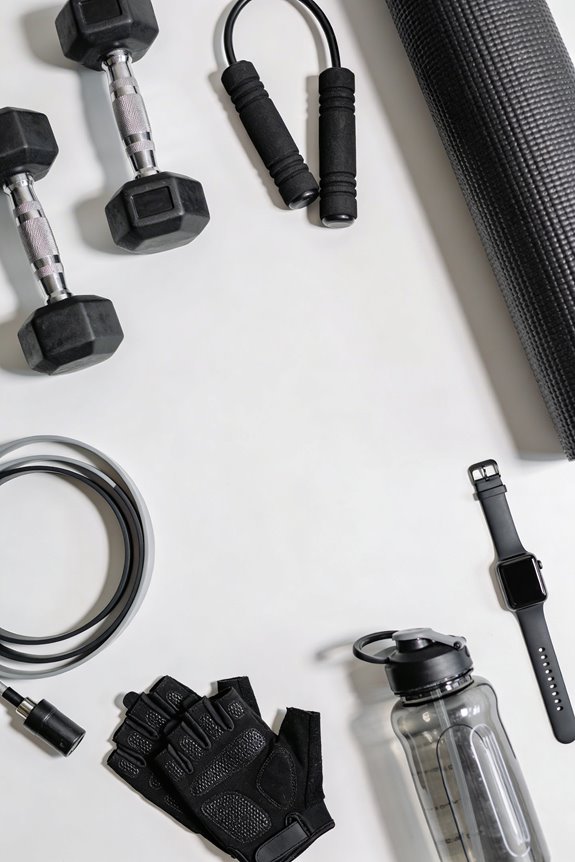
The Push Pull Legs split organizes workouts into three main categories: Push for chest, shoulders, and triceps; Pull for back and biceps; and Legs for quads, hamstrings, and calves. This method maximizes recovery, allowing us to train each muscle group effectively. It can be tailored for 3, 4, or even 6 days a week, making it suitable for various fitness levels. By continuing with us, you’ll discover how to structure your routine for best results.
Key Takeaways
- The Push Pull Legs split categorizes workouts into three focused routines: Push (chest, shoulders, triceps), Pull (back, biceps), and Legs (quads, hamstrings, calves).
- This method increases training frequency, enhancing muscle growth while allowing for effective recovery and reducing overtraining risk.
- Variations include 3, 4, 5, or 6-day schedules, accommodating different fitness levels and personal recovery needs.
- A structured approach emphasizes compound exercises, progressive overload, and personalized nutrition to maximize results and muscle health.
- Consistency, effective recovery strategies, and suitable workout gear are crucial for optimizing performance and achieving fitness goals.
What Is the Push Pull Legs Split?
What if I told you there’s a way to structure your strength training into three simple, focused days? The Push Pull Legs (PPL) split is a practical approach that can make your workout routine feel more efficient and organized. It breaks down exercises into three categories: push, pull, and legs.
On Push Day, you’ll be working on your upper body pushing muscles—think about targeting your chest, shoulders, and triceps. If you want to build strength in those areas, this day is key. Then there’s Pull Day, where you get to focus on your pulling muscles, like the back and biceps. This really helps in creating a balanced upper body. Finally, Legs Day is all about your lower body, hitting the quads, hamstrings, and calves.
So why does this matter? Well, the beauty of the PPL split lies in its flexibility. You can adjust it to fit your schedule, whether you can commit to 3, 4, 5, or even 6 days a week. Here’s the trick: organizing your muscle groups this way not only helps enhance muscle engagement through compound exercises, but it also optimizes your recovery time.
Honestly, whether you’re just starting out or have been training for a while, the PPL split can work wonders. The varied training frequency allows you to hit each muscle group efficiently while also giving them enough time to recover.
In short, by trying out the Push Pull Legs split, you could find a rhythm that fits your lifestyle and goals. Why not give it a shot and see how it works for you? Having durable gym bags to carry your gear can enhance your workout experience by keeping your essentials organized and protected.
Benefits of the Push Pull Legs Training Method

Are you tired of hitting the gym but not seeing the results you want? If so, the Push Pull Legs (PPL) training method could be just what you need. This split organizes your workouts into three main types: pushing, pulling, and legs. By doing so, you’re able to hit those muscle groups more effectively and really focus on what you’re working.
One of the main reasons to go with PPL is the increased training frequency. Instead of only targeting a muscle group once a week, you can work on it several times, which is great for muscle growth. Plus, you’ll find that grouping similar muscle movements helps not just with performance but also with recovery. By pairing exercises in this way, you lower the risk of overtraining and give your body a better chance to adapt and grow stronger.
Here’s the trick: if you’re just starting out or you’ve been lifting for a while, this method is super versatile. It lets you concentrate on specific muscle groups, making it a fantastic option no matter your fitness level. Try it out, and you’ll see that it suits any goal, whether you want to build strength, increase muscle size, or just get fit.
So, what can you expect with this training style? Here’s a brief breakdown:
- Push Days: Focus on chest, shoulders, and triceps.
- Pull Days: Target back, biceps, and rear delts.
- Leg Days: Work on quads, hamstrings, glutes, and calves.
The best part is, this structure keeps your workouts organized, which can really help when motivation dips. Honestly, nobody enjoys that feeling of wandering from one machine to another without a plan.
Wrapping it all up, the PPL method can bring some much-needed structure to your workouts. It also supports consistent progress much like how moisture-wicking fabrics in workout gear help maintain comfort during exercise. Give it a shot and see if it helps you break through those plateaus. What’s your go-to training method right now?
Essential Exercises for Each Push Pull Legs Workout

Essential exercises form the backbone of each Push Pull Legs workout, ensuring you effectively target the necessary muscle groups. On Push Day, you should look at including compound lifts like the Barbell Bench Press and Overhead Shoulder Press. But don’t stop there; add in some isolation movements too, such as Lateral Raises and Triceps Pushdowns to really focus on those muscle groups.
When it comes to Pull Day, you can’t go wrong with a solid lineup of key lifts like Lat Pulldowns and Dumbbell Rows. And don’t forget about your biceps—Face Pulls and Barbell Curls are perfect for that. You might be wondering, “How do I really make the most out of this?” Well, it’s about finding the right balance.
For Leg Day, think big with compound exercises such as Squats and Romanian Deadlifts. These move the needle. You might also want to throw in some Walking Lunges and Calf Raises to add a bit of variety. Aim for 3-5 sets of each exercise, and try to hit rep ranges of 6-10 for compounds and 8-12 for isolations. Training this way is a great strategy to promote hypertrophy and muscle growth in your workout split. To maximize performance and comfort during workouts, using effective shoe deodorizers can help maintain fresh and odor-free footwear.
Common Variations of the Push Pull Legs Split
Are you feeling stuck in your workout routine? If you’re like a lot of people, the classic 3-day Push Pull Legs split might be what you’ve been following, but it doesn’t have to be the only way to get fit. There are plenty of variations that can fit different schedules and goals.
For those looking to ramp up their training, a rotating 5-day Push/Pull/Legs routine could be just what you need. This setup means you’re hitting the gym more frequently, which can really help with muscle growth, especially if you can dedicate more time to your sessions. If you’ve got that commitment, this could be the perfect fit.
Then there’s the pure 5-day version. This one gives every workout a fixed day, which can help create consistency. You get to combine push and pull movements twice a week, keeping your routine organized and effective.
And don’t forget about customizing your plan! You might try including ab workouts on leg days or adding some accessory workouts into the mix. These tweaks allow you to focus on those bigger muscle groups while giving your body the recovery time it needs, all while keeping things aligned with how you like to train—whether that’s focusing on specific body parts or going for full-body sessions.
Additionally, choosing the right supportive sports bras can enhance comfort and performance during your workouts, especially when following an intense routine like Push Pull Legs.
Is the Push Pull Legs Split Right for You?
Are you weighing whether the Push Pull Legs (PPL) split is right for your fitness journey? If you’re an intermediate or advanced lifter looking for balanced strength gains, this training split could be a solid fit. It’s flexible too; whether you want to hit the gym 3, 4, or 6 times a week, the PPL can adapt to your schedule.
One of the best parts of the PPL split? It helps muscle recovery by reducing overlap between the muscle groups you work. This means you can really focus on each area and push for growth. Plus, if you’re aiming for muscle hypertrophy, the PPL is perfect because it lets you train each muscle group twice a week.
If you’ve been sticking with a basic upper/lower split, considering a switch to PPL might just optimize your routine. So, why does this matter? Trust me, having a structured approach can lead to more efficient and effective results in the long run.
In short, if you’re serious about lifting and want to enhance your workout game, give the Push Pull Legs split some thought. What do you think? Ready to take your training to the next level?
Additionally, ensuring you have the right material quality in your workout gear can enhance comfort and performance during training sessions.
Limitations of the Push Pull Legs Method
The Push Pull Legs (PPL) method can seem appealing with its structured approach, but it’s not without its downsides. One big thing to consider is the time commitment. You’ll need to dedicate three to six days each week to make this method work. If you’ve got a busy schedule, fitting in that much gym time can be tough.
Now, if you’re an intermediate or advanced lifter, you might find the PPL split doesn’t cater well to your specific needs. It tends to focus more on overall strength rather than helping to boost those lagging muscle groups. You could end up feeling like you’re leaving something on the table, especially if you’ve got certain areas you’re trying to improve.
For newer trainees, muscle soreness and recovery will definitely come into play. Hitting the gym six days a week can be a steep climb, and you may find it affects your performance. Plus, the strict way PPL divides training days might not lend itself to quicker full-body workouts, which could mean longer sessions at the gym when you’re just trying to get in and out.
Here’s the trick: always evaluate your own fitness goals and be ready to tweak your routine. Adapting your training to suit your needs can lead to much better results. So, take a moment to reflect—what’s your priority? Is it building strength, bulking up specific muscles, or having a more efficient workout schedule? Don’t forget, managing recovery with techniques like muscle soothing baths can also play a significant role in optimizing your workout results.
Structuring Your Push Pull Legs Routine
When you’re figuring out how to set up a Push Pull Legs routine, it’s key to think about your own fitness levels and goals. Are you aiming for strength, hypertrophy, or just trying to stay fit? Whether you choose a 3-day, 5-day, or 6-day split, make sure it suits your lifestyle and preferences.
For a 3-day plan, you could do Push on Monday, Pull on Wednesday, and Legs on Friday. This setup gives your muscles a chance to recover before you hit them again. But if you’re ready to step it up, a 5-day split can look like Push, Pull, Off, Legs, Off. This keeps things fresh by hitting each muscle group twice in ten days.
Now, if you’re all in for a 6-day routine, you can target all muscle groups every 4-5 days. This approach is great for building muscle. The best part is, before diving into isolation exercises, make sure you’re prioritizing those compound movements. Why? They engage more muscle fibers and help maximize your results while supporting recovery.
Incorporating relaxation techniques like acupressure mats into your routine can help improve recovery and enhance overall well-being.
Tips for Maximizing Results With Push Pull Legs
Ever wonder why some workout routines seem to work wonders while others fall flat? If you’re diving into a Push Pull Legs routine, consistency is your best friend. Aiming for three workouts a week hits that sweet spot. This schedule lets you balance your Push, Pull, and Legs sessions while ensuring your body gets the recovery it needs.
Start each workout with compound exercises. These bad boys engage multiple muscle groups at once, helping you build strength faster. Here’s the trick: add progressive overload to the mix. Gradually upping your weights or reps can lead to impressive gains over time. And don’t forget about rest days—taking one complete day off a week is crucial, especially if you’re on a six-day split. Trust me, your muscles will thank you for it.
Nutrition plays a big role too. It’s essential to tailor your food intake to support your training goals. Make sure you’re getting enough protein to boost muscle recovery and growth. Honestly, without the right fuel, all that hard work in the gym might not yield the results you’re hoping for.
Also, consider wearing gear with moisture-wicking fabrics to keep comfortable and focused during intense workouts.
In short, stick to a steady schedule, prioritize the big lifts, embrace progressive overload, and eat smart. What’s one tweak you can make this week to maximize your gym results?
Frequently Asked Questions
How Long Should Each Push Pull Legs Session Last?
Our session duration typically ranges from 60 to 90 minutes, depending on workout intensity and personal goals. Balancing session frequency and muscle recovery, we consider training experience and exercise variation for effective session planning and recovery.
Can Beginners Use the Push Pull Legs Split Effectively?
Absolutely, beginners can harness the push-pull legs split! It offers benefits like improved muscle recovery, exercise variety, and goal setting. With proper form, motivation tips, and nutrition strategies, we’ll track our progress together effectively.
What Equipment Is Necessary for a PPL Routine?
For an effective routine, we need dumbbell options, barbell necessities, resistance bands, and possibly cable machines. Bodyweight training works great too! Gym availability and budget considerations help us choose the best equipment alternatives for home workouts.
How Often Should I Shift My Exercises in PPL?
We should shift our exercises every 4 to 6 weeks, considering personal goals, recovery time, and muscle adaptation. Incorporating exercise variation and intensity changes helps maintain schedule flexibility, so we stay engaged and continuously progress.
Can PPL Be Combined With Cardio Workouts?
Yes, combining PPL with cardio workouts enhances our training goals. It boosts workout efficiency while ensuring strength balance and muscle adaptation. We should consider cardio frequency, intensity levels, and recovery time for ideal results and performance tracking.