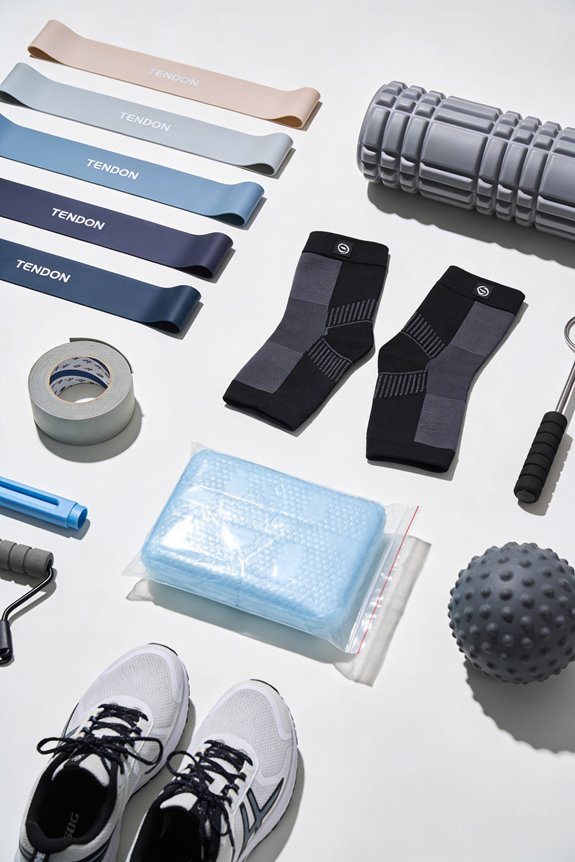
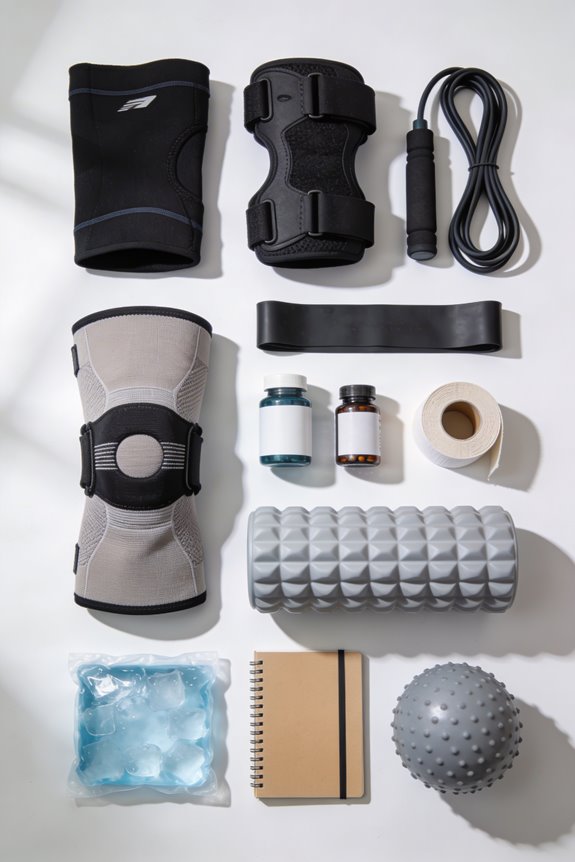
To identify and treat common running injuries, we should look for specific symptoms. For instance, shin splints manifest as pain in the lower legs, while runner’s knee causes dull pain around the knee joint. Treatment often includes rest, ice application, and proper footwear. Additionally, stretching can alleviate symptoms of plantar fasciitis and Achilles tendinitis. It’s essential to monitor discomfort and consult a doctor if pain persists. We’ll explore further insights into injury prevention and effective recovery.
Key Takeaways
- Recognize symptoms like dull knee pain, sharp heel pain, or leg discomfort to identify common running injuries like runner’s knee and shin splints.
- Rest and ice application are crucial first steps for treating most running injuries to reduce inflammation and promote healing.
- Incorporate strengthening and stretching exercises specific to the injury, such as calf stretching for Achilles tendinitis or hip strength for runner’s knee.
- Invest in proper footwear to provide necessary support and cushioning, helping prevent overuse injuries during running.
- Seek medical advice if pain persists for over a week or if you experience sharp pain that disrupts your ability to walk.
Identify Common Running Injuries and Symptoms
Have you ever felt a nagging pain that creeps up during your runs? You’re not alone. Common running injuries can sneak up on you, and recognizing their specific symptoms is crucial for keeping you on track.
Take runner’s knee, for example. It usually comes with a dull pain around the front of your knee. This pain tends to flare up when you’re active or even after you’ve been sitting for too long. Frustrating, right?
Then there’s IT Band Syndrome. If you notice an achy or burning sensation on the outer part of your knee, it might be spreading to your hip while you run. That’s your body signaling it needs some attention.
Shin splints are another pesky issue. You’ll feel pain in the front or inner side of your lower legs, especially when you push yourself. This symptom often points to overuse, making it a classic runner’s complaint.
Don’t let heel pain in the morning slide either. That sharp discomfort feels worse after you’ve been inactive and can be a tell-tale sign of plantar fasciitis. It’s one of those signs you should definitely listen to.
Finally, if you’re feeling a tight, painful spot just above your heel that limits how you can move your toes, you might be dealing with Achilles tendinitis.
So, why does this matter? Addressing these symptoms right away can help you avoid a bigger setback later on. Pay attention to your body—it’s always trying to tell you something.
In short, keeping these common injury signs on your radar can lead to quicker recoveries and better running experiences. Have you faced any of these issues before? How did you handle them?
Wearing moisture-wicking fabrics and proper support can also reduce discomfort when recovering from these injuries.
Shin Splints: How to Recognize and Treat Them

Shin splints, otherwise known as medial tibial stress syndrome, can be a real pain—literally. If you’re a runner, you’ve probably felt that nagging discomfort along the inner part of your shin, especially when you’re pushing hard on concrete or pavement. It’s all too easy to overdo it, but recognizing the signs early can help you get back on track faster.
So, what can you do to tackle shin splints? Here are some solid tips:
- Rest up: Take some time off from running to let your legs heal.
- Ice it: Applying ice to the area can help reduce inflammation and alleviate pain.
- Stretch regularly: Incorporating gentle stretching exercises into your routine can relieve tension in your muscles.
It’s also crucial to invest in the right footwear. Shoes that provide good support and cushioning really make a difference, especially on those harder surfaces. Gradually increasing your mileage is a smart way to prevent those pesky overuse injuries. Have you ever thought about cross-training? Activities like cycling or swimming can be easier on your shins, allowing you to stay active without further strain.
Truth is, managing shin splints is all about listening to your body and being proactive. Wearing track jackets with moisture-wicking technology can help maintain comfort during recovery runs or light training days. By following these strategies, you can keep those shin issues at bay and return to running when you’re ready.
Runner’s Knee: Identifying and Managing Pain

Ever felt that nagging pain in the front of your knee, especially after a long run or even just sitting for too long? If you’re nodding along, you’re not alone. This annoying issue, commonly referred to as runner’s knee, is something many of us face. It’s more formally known as patellofemoral pain syndrome, and it usually stems from muscle imbalances, wearing the wrong shoes, or just pushing yourself too hard.
So, what can you do about it? First off, strengthening your hips and quadriceps can really help ease that pain. Focus on exercises like squats, lunges, and side leg raises. Not only will they alleviate discomfort, but they’ll also help you prevent future knee issues.
Here’s another tip: pay close attention to your footwear. Wearing the right shoes can make all the difference. Make sure they offer the support you need for your running style. And don’t underestimate the power of rest. Your body needs time to recover, so listen to it! If your symptoms linger, don’t hesitate to seek advice from a medical professional. Getting a proper diagnosis is key to finding the best way to tackle the problem.
Honestly, addressing runner’s knee early can save you from a lot of trouble down the line. Remember, staying ahead of the game is all about being proactive. Additionally, choosing compression wear with effective moisture management can enhance comfort during your recovery and training.
Have you ever dealt with knee pain while running? What strategies worked for you?
Plantar Fasciitis: Symptoms and Effective Recovery Techniques
Plantar fasciitis can be a real pain—literally! If you’re a runner, you know what I mean. That stabbing heel pain, especially when you take those first steps in the morning? It’s not just annoying; it can seriously hold you back. Flat feet and high arches can make the situation even trickier, but there are ways to tackle it.
So, what’s the deal with recovery? Try this: incorporate some stretching exercises that focus on your Achilles tendon and the plantar fascia. This simple addition can really help with flexibility and reduce pain. Also, don’t overlook your footwear! Wearing supportive shoes or using orthotic inserts can make a big difference by lowering the stress on your plantar fascia. It’s all about finding that sweet spot between comfort and support.
But prevention is where it’s at too. Maintaining a healthy weight is essential, and getting the right fit in your shoes can go a long way in avoiding this injury in the first place. Honestly, if you’ve been on a running break, remember to ease back into it. Gradually ramping up your mileage will help you avoid aggravating symptoms and give your body a fighting chance at recovery.
Wearing well-fitted sports bras with adjustable straps can also improve your overall running comfort, which may indirectly reduce compensatory movements that contribute to injury.
In short, if you’re dealing with plantar fasciitis, you’re not alone and there are steps you can take. What’s your go-to tip for dealing with running injuries?
Achilles Tendinitis: Treatments and Prevention Techniques
Have you ever felt that nagging pain just above your heel after a long run? That might be Achilles tendinitis creeping in. This pesky condition often shows up due to overuse or repetitive strain on the Achilles tendon. You might notice pain and stiffness in the back of your lower leg, and trust me, it can really slow you down.
So, what can you do about it? Start with some simple steps:
- Rest is key. Your body needs time to heal.
- Apply ice to reduce inflammation.
- Don’t underestimate the power of calf stretching exercises; they can work wonders.
Here’s the trick: engaging in eccentric exercises, like heel-lowering movements, has been shown to enhance recovery and speed up rehabilitation. If you find yourself dealing with this issue for a while, physical therapy might be worth considering. And let’s be real—if nothing seems to work, surgical options are available, but that’s usually a last resort.
To prevent Achilles tendinitis in the first place, think about your routine. Are you warming up and cooling down adequately? Gradually increasing your running intensity is crucial to avoiding overuse injuries. Honestly, pacing yourself can make all the difference in whether you end up battling this condition. Additionally, using running shoes with proper cushioning technology can help reduce impact and protect the Achilles tendon during runs.
Essential Techniques to Prevent Common Running Injuries
What do you do when running starts to feel more like a chore because of nagging injuries? You might think you’re stuck with them, but let’s focus on preventing those annoying running injuries before they even have a chance to creep in.
First off, it’s crucial to ramp up your running mileage gradually—aim for just a 10% increase each week. Going too fast can lead to issues like stress fractures or ankle sprains, and nobody wants that. A little discipline now can save you a lot of grief later.
Strength training is another cornerstone of injury prevention. Incorporating exercises for your core and legs really boosts your overall stability, which is key for any runner. Don’t underestimate how much a solid strength routine can enhance your running experience.
Don’t forget about your shoes! Investing in a good pair that fits nicely and gives you the support you need is a no-brainer. And remember, it’s a good idea to replace them every 300 to 500 miles. Worn-out shoes can make all the difference in your comfort levels.
To help with flexibility, trying out some dynamic stretching in your warm-up can work wonders. It gets your muscles ready for action and can prevent those little tweaks and pulls that can sideline you.
Lastly, let’s talk about the importance of listening to your body. It’s essential to tell the difference between normal muscle soreness and something more persistent. Trust your instincts—if something doesn’t feel right, take a step back and address any concerns. It can save you from ongoing issues later on.
In addition, choosing workout gear made from moisture-wicking materials can help keep your muscles dry and comfortable, reducing the risk of chafing and irritation during runs.
When to Talk to a Doctor About Running Pain?
Are you ignoring that nagging pain in your legs after a run? It’s easy to brush it off as just part of being active, but there are signs that it’s time to see a doctor. If you’ve been dealing with persistent pain that lasts longer than a week, don’t hesitate to seek medical advice. This could mean there’s a more serious issue at play.
Pay close attention to sharp pain while running. If you find it hard to walk because of discomfort, or if a joint is noticeably swollen, those are big red flags. These symptoms aren’t just annoying; they could indicate an injury that needs professional attention. And if you’ve stopped running but the pain lingers, it’s definitely time to get an expert’s take on what’s going on.
If rest and ice haven’t helped, it’s critical to consult with a doctor. Early intervention can save you from more severe overuse injuries down the line. So, why does this matter? Ignoring pain now might lead to longer recovery times later.
In short, listen to your body. If something feels off, don’t wait it out. Have you experienced persistent pain that just won’t go away? It might be time for a visit to your healthcare provider. Wearing appropriate gear, such as waterproof and windproof jackets, can also help protect your body during recovery and outdoor activity.
Expert Tips for Recovery From Running Injuries
Recovering from running injuries can feel overwhelming, can’t it? It’s crucial to follow a smart game plan that focuses on healing while keeping future injuries at bay. If you’re dealing with common issues like knee pain, don’t wait it out. Seek help from a sports medicine doc or orthopedic surgeon if that nagging pain sticks around for more than a week.
You might’ve heard about the RICE method—Rest, Ice, Compression, Elevation. It’s a fundamental part of your recovery toolkit, especially right after an injury. After you’ve given your body some time to heal, it’s time to slowly get back to running. A good rule of thumb is to increase your mileage or intensity by no more than 10% each week. This method helps lower the risk of re-injury and keeps you on the right track.
What about strengthening and stretching? They’re more than just add-ons; they’re essential. Incorporating the right exercises can ease worries, especially if you’re dealing with something like Achilles tendinitis. Aim for targeted workouts that build strength in areas prone to injury.
Don’t underestimate the importance of your shoes, either. Proper footwear and maybe even some orthotic supports can make a world of difference. It’s all about keeping your body aligned and cushioned while you recover. Using hydrocolloid blister bandages can also help protect your feet during recovery by reducing friction and promoting healing.
Frequently Asked Questions
How Can I Balance Running With Cross-Training Activities?
To balance running with cross-training, we can include strength training, yoga practices, and cycling alternatives. It’s essential to prioritize flexibility workouts, rest importance, and schedule balance for effective injury prevention techniques and reaping cross-training benefits.
What Role Does Nutrition Play in Injury Recovery?
Nutrition’s our superhero in injury recovery! By focusing on nutritional timing, hydration strategies, and protein sources, alongside anti-inflammatory foods and vitamin supplementation, we’ll meet our calorie needs while ensuring dietary balance and nutrient density.
Can Mental Preparation Help Prevent Running Injuries?
Absolutely, mental preparation’s essential! By using mental resilience strategies, visualization techniques, and positive self-talk, we can enhance our focus, manage stress, and lower injury risk. Incorporating mindfulness practices and relaxation methods helps too—let’s prioritize this together!
What Type of Shoes Should I Wear for Different Terrains?
It’s funny how different terrains demand specific shoes! For road running, we prefer cushioned shoes, while trail running calls for stability shoes. Minimalist shoes suit certain foot types, too, especially in varying weather conditions and terrains.
How Does Weather Affect Running Injury Risk?
Weather considerably affects our injury risk. Temperature impacts muscle performance, humidity effects hydration, and precipitation precautions help us avoid slips. Seasonal considerations, like summer heat or winter conditions, require environmental adaptations and terrain changes to stay safe.