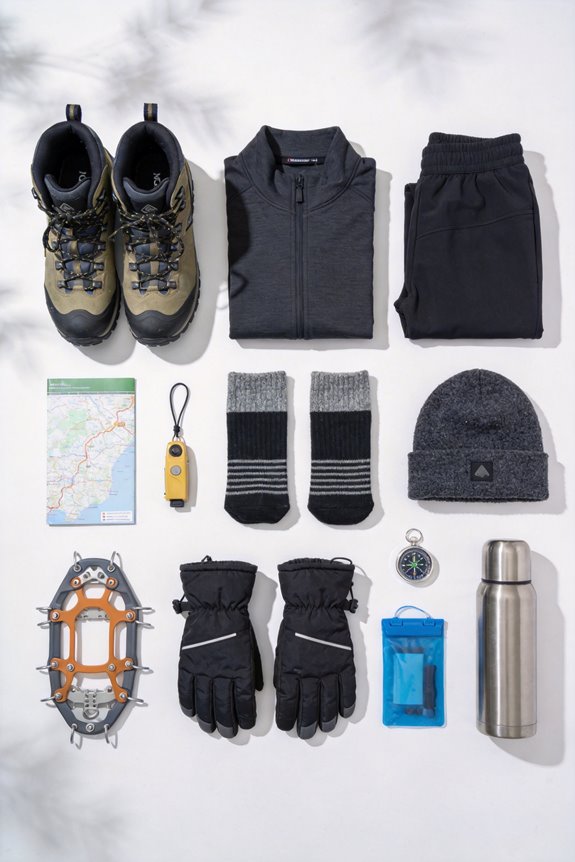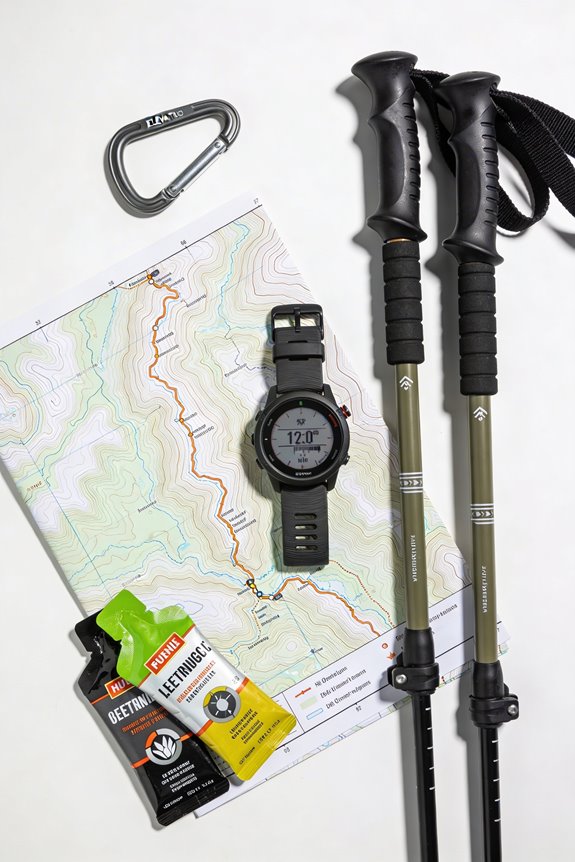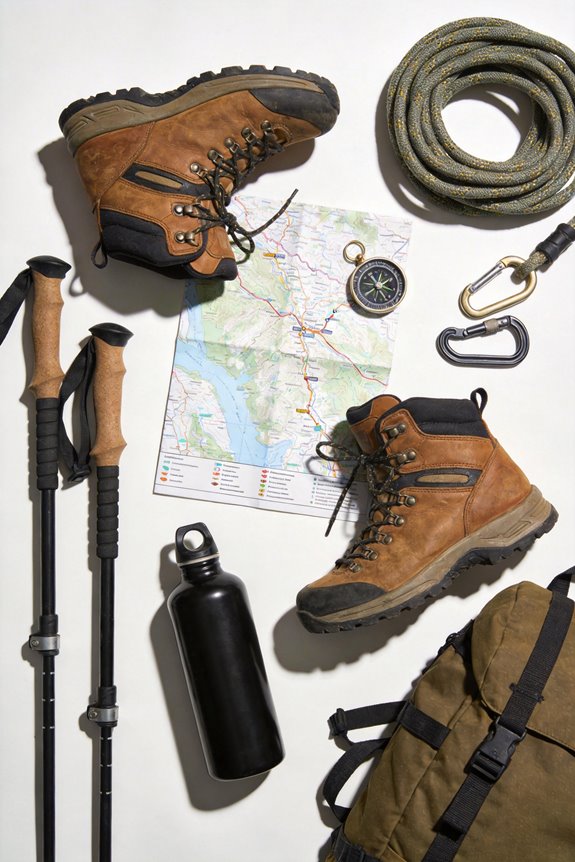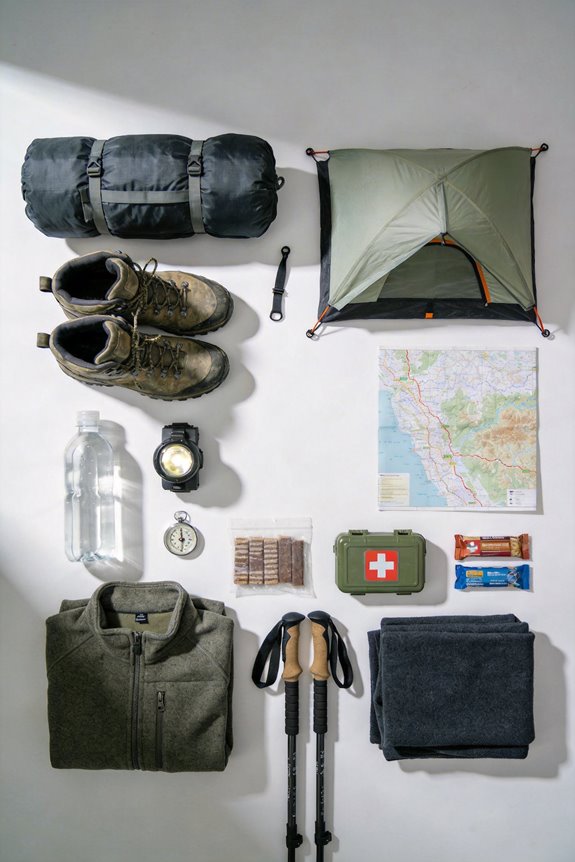

To prepare for our first overnight hiking trip, we should choose a familiar trail with a round-trip distance under 10 miles and low elevation gain, like the Pine Ridge Trail. We need a well-fitting 50-60 liter backpack, a lightweight tent under 4 pounds, and a down sleeping bag rated for 20°F. Clothing should be quick-drying, made from polyester blends, and layered for warmth. Meals must be high-calorie; dehydrated options work best. We’ll also learn about safety protocols next.
Key Takeaways
- Choose a familiar trail with a round-trip distance under 10 miles and low elevation gain for safety and comfort.
- Pack essential gear, including a lightweight tent, sleeping bag, and compact stove, ensuring total gear weight is manageable.
- Map your route using topographic maps and designate campsites near reliable water sources, keeping alternate routes in mind.
- Research trail regulations, permits, and food storage rules, especially in areas with wildlife, to stay compliant and safe.
- Plan meals in advance, focusing on lightweight, nutrient-dense foods, and adhere to Leave No Trace principles while hiking.
Choose the Right Trail for Your First Overnight Hiking Trip
Choosing the right trail for your first overnight hiking trip is crucial. It can really set the vibe for your adventure. So, what should you look for? Start by considering a trail you’re familiar with, aiming for a round-trip distance of less than 10 miles. This isn’t just about keeping it easy; you want to feel at home while you get used to the experience.
Think about trails that have well-defined paths and low elevation gains—preferably under 1,000 feet. You’ll feel more at ease knowing you’re less likely to get lost. Plus, it helps if you can find campsites near reliable water sources. This will make staying hydrated and whipping up meals a breeze.
Before you head out, definitely check on current trail conditions. You also need to understand the permit regulations, if there are any. Now, here’s the trick: be flexible with your itinerary. Consider having alternate campsites in mind. This way, if you’re feeling tired or the weather changes unexpectedly, you’ll be prepared and can adjust as needed.
In short, choosing the right trail for your first overnight hiking trip means a stress-free experience filled with good memories. What trail will you choose to make your first memories on? To make your trip more comfortable, consider wearing polyester base layers that wick moisture away and provide insulation during your outdoor adventure.
Prepare Essential Gear for Your Overnight Trip

What’s the biggest hassle when thinking about an overnight hiking trip? It’s figuring out what gear you really need. After you’ve picked the perfect trail, gathering the right essentials can make or break your experience.
Start with a backpack that fits you well. Aim for one between 50-60 liters that holds a base weight of 20-30 pounds. You don’t want to be lugging around unnecessary weight on the trail. Alongside that, consider a lightweight tent weighing in at under 4 pounds. Combine this with an inflatable sleeping pad for a cozy night under the stars.
You might also want to think about a down sleeping bag. Find one rated for the temperatures you’ll face and keep it below 3 pounds. When it comes to meals, a compact backpacking stove is essential for cooking up something warm. Don’t forget food and water—those are crucial!
And let’s talk safety for a moment. A well-stocked first aid kit is a must-have. Here’s the trick: always pack the 10 Essentials. Make sure you’ve got navigation tools, fire starters, and emergency gear to keep you safe.
Selecting clothing that offers lightweight nylon with moisture-wicking and quick-drying properties can greatly improve your comfort on the trail.
So, why does this matter? Packing these essentials not only enhances your comfort, but it also keeps you prepared for whatever nature throws your way. You’ll appreciate the peace of mind that comes from being well-equipped for your adventure.
To sum it up, get your gear sorted right and you’ll set yourself up for an amazing overnight hiking trip. What’s the first piece of gear you’re excited to pack?
Map Your Route and Identify Campsites

Have you ever set out on an overnight hike, only to find yourself lost or scrambling for a place to set up camp? It’s a frustrating experience, and that’s why mapping your route and identifying campsites ahead of time is so crucial. This preparation not only keeps you organized but also ensures your safety throughout the hike.
Start by checking out some topographic maps of the area. They’ll give you a good sense of the terrain and elevation changes. This is key because the steeper the trail, the more challenging your hike will be. When you know what to expect, you can better gauge your skill level and decide on your pacing.
Next up, look for designated campsites, particularly those close to reliable water sources. After all, you don’t want to struggle for drinking and cooking water when you’re tired at the end of the day. I always find that it’s smart to pick spots that have good access to water, yet also offer a certain level of safety and comfort for the night.
As you’re planning, take some time to read through trail guides and check recent trip reports as well. These can be goldmines of information about the current conditions of the trail and any possible hazards you might encounter. So, why does this matter? Because knowing what others have experienced can save you a lot of hassle on your own trip!
While you’re putting together your route, remember to factor in some exit points. Emergencies happen, weather can turn, and sometimes, hikes just don’t go as planned. Having a few alternative routes not only gives you flexibility but also peace of mind.
Additionally, consider packing versatile gear such as convertible cargo pants that adapt to changing weather and trail conditions to enhance your comfort and preparedness.
Know Your Trail Regulations and Permit Requirements
Have you ever set out for a hike only to realize you didn’t check the rules first? Understanding trail regulations and permit requirements can save you a lot of headaches. Before you hit the path, it’s important to look into the specific regulations for your trail. A lot of places require a wilderness permit for overnight camping, and they often need reservations ahead of time.
Start by checking for designated camping areas, or familiarize yourself with the guidelines for dispersed camping. If you’re venturing into bear country, know the food storage rules—this often means using bear canisters or other approved methods to keep your food safe from curious bears.
Don’t forget about parking! Some trailheads require a day-use or an overnight pass, so make sure to grab those ahead of time to avoid any surprises when you arrive.
Here’s the trick: consult official park or forest service websites for the latest information on permits and trail-specific rules. It’s a small step that can make a big difference in your outdoor experience.
Additionally, preparing with waterproof gear can greatly enhance your comfort and safety on overnight trips involving uncertain weather.
In short, knowing the regulations ahead of time is key for a smooth hiking trip. So, are you ready to dive into the details and plan your next adventure?
How to Plan Your Meals and Snacks for the Journey
What’s the most frustrating part of planning an overnight hiking trip? Figuring out what to eat, right? You want to stay energetic and satisfied without lugging around heavy food. To get it right, focus on high-calorie items that are also easy to carry and prepare. Aiming for around 3,000-4,000 calories a day will keep you fueled for those long hikes.
Let’s break it down: Organize your meals by day, ensuring you have a mix of carbs, proteins, and fats. Lightweight, dehydrated, or freeze-dried meals work best since all you need is boiling water. They save you space in your backpack too! And don’t forget the snacks; things like jerky, granola bars, and dried fruit can give you that quick energy boost when the trail gets tough.
So, why does this matter? Eating the right foods can really affect your energy levels and overall enjoyment on the hike. Before you head out, test any new foods to avoid stomach troubles on the trail. It’s also smart to pack some meds for digestive issues, just in case.
To sum it up, plan your meals wisely, pack smart snacks, and do a little prep work to ensure a smoother hiking adventure. Choosing the right apparel, including shorts made from quick-dry materials, can enhance comfort during your hike. What’s your go-to hiking snack?
Essential Safety Tips for Hiking Alone
Staying safe on an overnight hiking trip is just as crucial as picking the right meals or gear. Have you ever thought about what you’d do if something went wrong out there? First things first, let someone know your plans. Tell a friend or family member where you’re headed, your route, and when you expect to be back. It’s just smart to have someone keep an eye on your whereabouts.
Now, think about the communication tools you carry. If you’re venturing into areas without cell service, you really should consider taking an emergency device like a satellite phone or a personal locator beacon. You’ll feel a lot more at ease knowing you can reach out if things get dicey.
Camping near other hikers or near natural water sources isn’t just a good idea for company; it’s also safer. There’s strength in numbers, and if something happens, being around others can make a big difference. Don’t forget to pack a first aid kit too. Knowing some basic first aid can help you handle minor injuries until you get back to safety.
Choosing proper moisture-wicking fabrics in your clothing can also enhance comfort and prevent chafing during your hike.
Here’s the trick: trust your gut. If something feels off, don’t dismiss it. Adjust your plans, or even turn back if you need to. It’s always better to be safe than sorry in the great outdoors.
Leave No Trace Principles for Responsible Hiking
As you hit the trails, have you ever thought about how your choices affect the great outdoors? Following the Leave No Trace principles isn’t just a guideline; it’s essential for keeping our natural spaces clean and beautiful.
First off, packing out all your trash—including leftover food—is a must. It’s not just about aesthetics; leaving food behind can create real problems for wildlife. Think about it: a clean area benefits everyone, including the animals that call it home.
Sticking to established trails and campsites is another crucial step. This helps minimize our impact on the environment, so future visitors can enjoy the same views and experiences. If we all tread carefully, we can keep those paths clear for generations to come.
And let’s talk about a less glamorous but equally important topic: human waste disposal. If you need to go, remember to dig a cathole that’s at least 6-8 inches deep and a solid 200 feet away from water sources. If there are restrooms available, don’t hesitate to use them—that’s always the preferred option.
Now, respect for wildlife matters too. Observing from a distance is key; getting too close or feeding animals can really disrupt their natural behavior and health.
Choosing durable ripstop fabrics for your gear can also help reduce environmental impact by lasting longer and minimizing waste.
Frequently Asked Questions
What to Bring on an Overnight Hiking Trip?
When we pack for an overnight hike, we’ll bring essential gear like a tent and cooking system, pack trail snacks for energy, plan hydration needs, layer clothing appropriately, and include safety equipment for peace of mind.
How to Prepare for Your First Hiking Trip?
To prepare for our first hiking trip, we’ll focus on gear selection tips, essential clothing layers, hydration strategies, navigation skills, and safety precautions, while ensuring our physical conditioning keeps us energized and ready for adventure.
How to Prepare for a Long Hike the Night Before?
To prepare for a long hike the night before, we’ll check our gear checklist, pack essentials, plan meals, guarantee hydration strategies, consider weather conditions, and finalize our sleep setup for a successful adventure ahead.
Why Do Hikers Eat Gummy Bears?
We love gummy bears for their energy boost on the trail. These lightweight options provide quick sugar, making them one of our favorite hiking snacks. Plus, they offer sweet rewards to keep our spirits high.