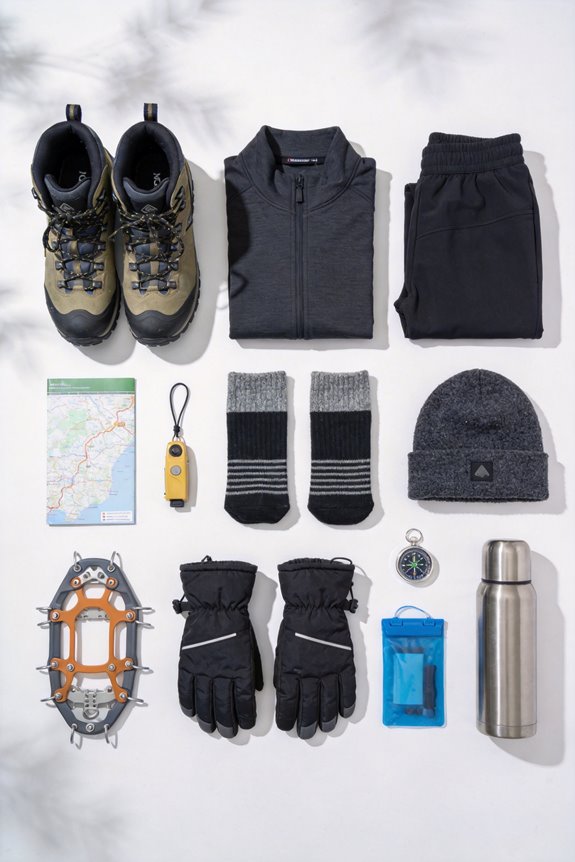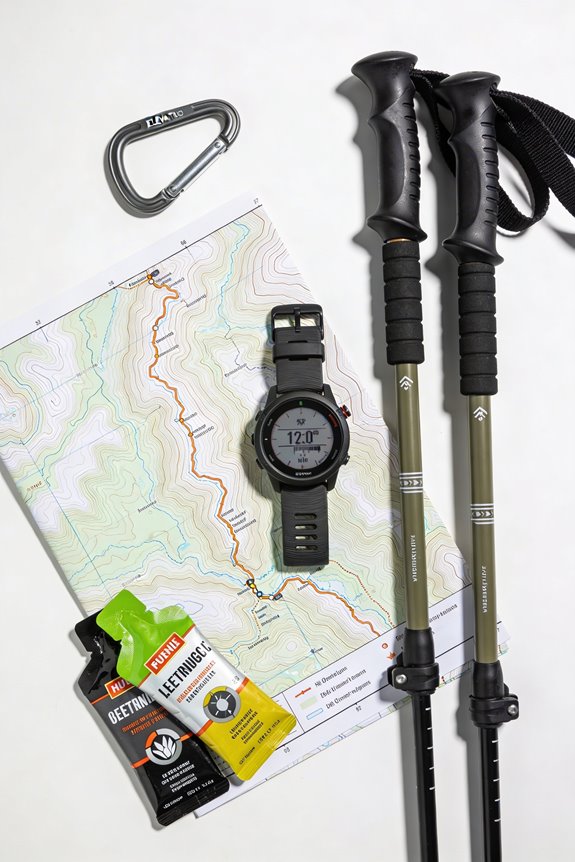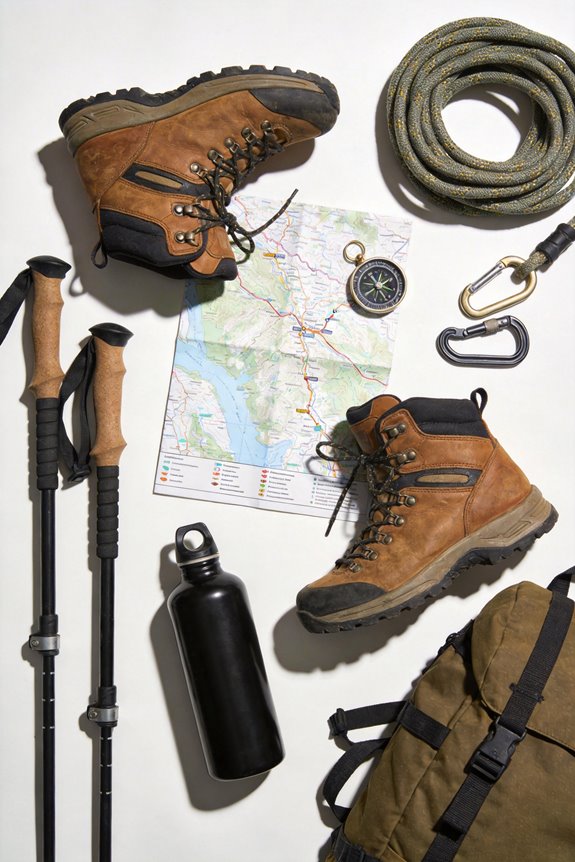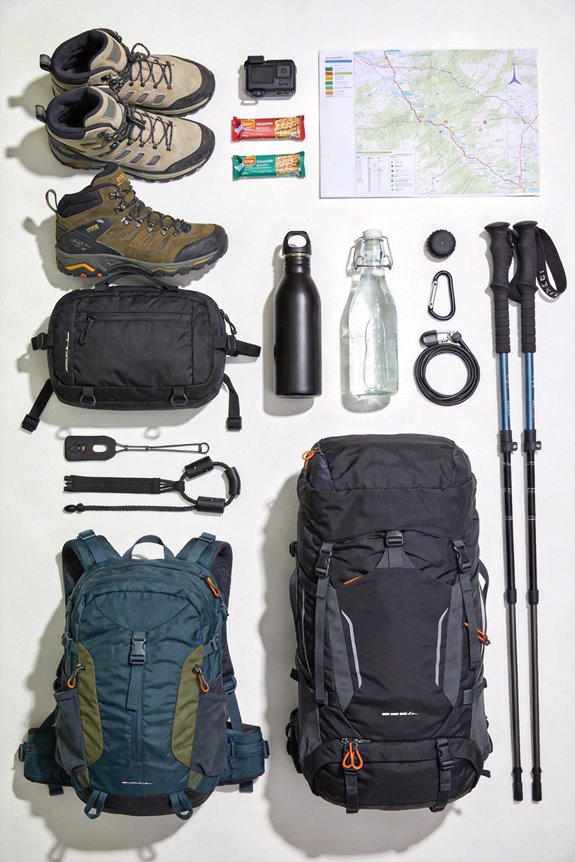

We need to understand that day hiking and backpacking training differ considerably. Day hiking usually involves shorter walks with lighter loads, while backpacking requires building endurance and strength to manage longer distances and heavier packs. We should focus on incorporating targeted exercises like hill runs to enhance cardiovascular health and strengthening our legs. It’s also crucial to break in our hiking boots on shorter trails to avoid blisters. By grasping these distinctions, we can prepare effectively for our next adventure.
Key Takeaways
- Day hiking training involves shorter walks with lighter packs for quicker recovery, focusing on refreshing outings in nature.
- Backpacking training emphasizes building endurance and strength for longer hikes with heavier loads over multiple days.
- Aim for 10,000 daily steps and integrate hill runs and circuit training to enhance cardiovascular health for both activities.
- Practice breaking in hiking boots on shorter hikes to prevent blisters during longer backpacking trips.
- Tailor training programs to meet the specific demands and challenges of day hiking versus backpacking experiences.
Understanding the Basics of Day Hiking
When you think about heading out for a day hike, do you picture a quick escape into nature, just enough to recharge your batteries? Day hikes are a fantastic way to enjoy the great outdoors without needing to commit to an overnight trip. You can cover a range of distances, from easy half-mile loops to more challenging 10-mile treks.
Packing for a day hike is a breeze. You don’t need to haul everything you own. Instead, focus on the essentials: water, a first aid kit, and clothing that keeps you comfortable, like polyester or nylon. Is it getting hot out? Make sure you’ve got a hat and some sunscreen. Remember, the trails are often marked with helpful color codes, making navigation pretty straightforward.
Honestly, it’s smart to check if your chosen trail requires permits. You don’t want to get there and find out you’re not allowed to hike! Also, watch out for possible hazards like slippery areas — no one wants a nasty fall to ruin their day.
Day hikes are perfect for folks with busy lives. They’re great for individuals or families and are especially good if you’ve got little ones or pets. You can jump into nature without needing to plan an elaborate camping trip. Wearing breathable, moisture-wicking fabrics like polyester blends can also improve your comfort during the hike.
Backpacking Gear Essentials: What You Must Have

What do you do when you’ve enjoyed a day hike and feel that urge to hit the trails for longer adventures? It’s a great feeling, but as you transition from day hikes to backpacking, having the right gear is a must. You’ll want a good backpack with a capacity of 50 to 70 liters because that’s going to hold all your gear for a few days in the wilderness.
Now, let’s talk shelter. A lightweight tent, usually weighing between 2 to 4 pounds, is crucial to protect you from wind, rain, and critters. Cooking gear comes next on the list—think portable stove and basic cookware. It makes it way easier to whip up meals compared to trying to eat trail mix every night. And don’t forget about hydration! A solid hydration pack or a reliable water filter that can hold up to 3 liters will keep you refreshed during your treks.
You might be wondering, so what else do I need? Besides those essentials, grab a good sleeping bag that’s rated for the temperatures you’ll encounter and a trusty sleeping pad for comfort at night. Also, it doesn’t hurt to carry a first-aid kit for any unexpected mishaps. A headlamp is really handy when the sun sets sooner than expected. Lastly, having versatile clothing layers can make all the difference, allowing you to adapt to changing weather. For longer adventures, consider a hydration vest with adjustable straps to ensure a secure and comfortable fit on your backcountry treks.
How Training for Day Hiking Differs From Backpacking

Have you ever wondered why training for a day hike feels so different from prepping for a backpacking trip? It’s an important distinction that can really shape how you tackle the trail.
For day hikes, you can stick to shorter walks with lighter packs. This means you get to recover faster and can hit the trails more often without feeling wiped out afterward. But when it comes to backpacking, you’ve got to step up your game. That means building endurance and strength to manage heavier loads and longer durations.
Preparing for Longer Hiking Trips: Building Mental and Physical Stamina
Preparing for longer hiking trips can feel overwhelming, especially if you’re not used to spending hours on the trail. Have you ever thought about what it really takes to build the stamina to tackle those longer journeys? It’s all about getting your body and mind ready for the challenge.
Aim for 10,000 steps a day. This isn’t just a number; it’s a benchmark that can boost your overall endurance. You might want to include hill runs and circuit training in your routine. Not only does this improve your cardiovascular health, but it also strengthens your legs, which is crucial for those tough trails that are waiting for you.
Transitioning from a day hike to a longer backpacking trip doesn’t have to be a huge leap. Start by breaking in your hiking boots on shorter hikes, which is a smart way to avoid blisters later on. And here’s the trick: core strength is essential, especially when you’re navigating uneven terrain. Incorporate exercises like sit-ups and planks to improve your balance and stability.
Recovery is just as important as training. Regular stretching keeps your muscles in check, helping with recovery after long walks. Plus, don’t underestimate the power of good rest. It’s essential for maintaining stamina and avoiding injuries as you prepare for those more demanding backpacking trips.
For added safety during early morning or nighttime hikes, consider wearing reflective bands to enhance your visibility on the trail.
Essential Gear for Hiking and Backpacking
Heading out for a hike or backpacking trip can feel a bit overwhelming. What do you really need to make sure everything goes smoothly? The truth is, the right gear can make your adventure a lot more enjoyable.
For day hikes, you’ll want your essentials to keep things simple. Water bottles are non-negotiable. Nobody wants to deal with dehydration halfway up the trail! Aim for moisture-wicking clothing that helps keep you dry as you sweat. Don’t forget a basic first aid kit—better safe than sorry, right?
When it comes to backpacking, the stakes are a bit higher. You need specialized gear to tackle those multi-day adventures. Trust me, a lightweight tent goes a long way in saving your back. You’ll also want a stove—cooking can be a lifesaver after a long day. Staying hydrated is key, so grab a good hydration pack.
Here’s the kicker: sleeping bags and pads are crucial too. Make sure your sleeping bag is rated for the temperatures you’ll face on your trip. A comfy sleeping pad can make a world of difference when it comes to a good night’s rest.
And let’s talk footwear for a minute. It’s tempting to just throw on your regular sneakers, but you might want to reconsider. You need boots that support your feet, especially on those longer treks. Break them in before you hit the trail to avoid nasty blisters.
As you pack, keep in mind that your load should be around 30 to 50 pounds. So, choosing gear that’s both comfortable and waterproof is really important for your safety.
Additionally, wearing quick-drying fabrics can significantly improve your comfort by keeping moisture away from your skin during vigorous activity.
All in all, planning a hike or backpacking trip doesn’t have to be complicated. Just remember your essentials, and you’ll be set to enjoy the great outdoors. What piece of gear can’t you head out without?
Training Techniques for Hiking and Backpacking: Building Endurance
Building endurance for hiking and backpacking isn’t just about having the right gear. It’s about being physically ready for the trail. You should really aim for at least 10,000 steps each day to boost your stamina. Hill runs and circuit training are fantastic ways to strengthen your legs and improve your cardiovascular fitness.
Ever thought about how important it is to break in your footwear? Before you hit those longer backpacking trips, take the time to complete a few shorter day hikes. This simple step can save you from potential injuries down the line.
Don’t forget about your core. Strengthening exercises like sit-ups and planks play a key role in improving your balance, which matters when you’re maneuvering with a loaded day pack on uneven terrain. Regular stretching is crucial too. Give yourself recovery days between your training sessions so your muscles have time to repair. That way, you’ll be ready for those adventurous hikes.
In addition to physical training, practicing relaxation techniques such as using an acupressure mat can help improve muscle recovery and reduce tension after tough workouts.
Truth is, your preparation can make a big difference. With a bit of planning and consistent training, you’ll find yourself more than ready for any trail. What’s your go-to workout before a hike?
Hiking and Backpacking Safety Tips
Before you hit the trails, have you thought about the safety measures that can keep you out of trouble while hiking and backpacking? First off, it’s super important to check the weather forecasts. Temperature changes can mess with your comfort and safety, and nobody wants to be caught in a downpour without proper gear.
Speaking of gear, make sure everything you bring is waterproofed. You don’t want your tent or sleeping bag turning into a soggy mess because of unexpected rain. Familiarizing yourself with the camp area is a must, too. You definitely want to steer clear of spots showing signs of wildlife activity—trust me, it’s better to be safe than sorry.
Let’s talk about first aid kits. Everyone should carry one that’s well-equipped, so stock it up with adhesive bandages, antiseptic wipes, and pain relievers. Injuries can happen out there, and having basic supplies on hand can make a big difference in how you handle them.
Try this: practice setting up your tent and cooking equipment at home or on shorter hikes. This not only builds your confidence but prepares you for those longer backpacking trips. Honestly, it’s a straightforward way to get comfortable with your gear before you really need it.
Also, dressing in layers with moisture-wicking fabrics helps maintain body temperature and keeps you comfortable throughout your outdoor activity.
Transitioning From Day Hiking to Backpacking: Essential Beginner’s Guide
Making the shift from day hiking to backpacking can feel like a bit of a leap. One of the first things you’ll want to tackle is getting used to carrying a heavier pack. That means packing overnight gear like tents and cooking equipment, which you might not be used to. I recommend starting with some practice runs in familiar places, maybe even in your backyard. It’s a safe space to figure out the essentials.
You really can’t underestimate the importance of being aware of potential risks. Temperature changes, animal encounters, and sudden bad weather can throw a wrench in your plans. So, why does this matter? Because understanding these risks is vital for making sure you stay safe on your overnight trips. Investing in waterproof bags is something you should seriously consider; they’ll help keep your gear dry if it rains unexpectedly. Plus, choosing protected camping spots can help minimize risks from falling trees or harsh winds.
As you get ready, regularly reviewing a gear checklist can make a big difference. It’s all about optimizing weight and functionality to ensure you’re set for longer trips. Try this: when you pack, think about what you really need versus what’s just nice to have. The best part is that planning like this will not only help you feel more comfortable but also make your adventures a lot smoother. Wearing comfortable, durable clothing with an adjustable waist can significantly enhance your comfort on the trail.
Exploring Nature: The Benefits of Hiking and Backpacking
Have you ever felt that urge to escape the daily grind? That’s where hiking and backpacking come in. They’re more than just outdoor activities; they’re your ticket to reconnecting with nature and yourself. Day hiking is a great way to start. You can find marked trails that cater to all fitness levels, making it an easy way to dip your toes into the wilderness.
But if you’re looking for something deeper, consider backpacking. It’s not just about the hike; it’s about the journey. Picture camping under a blanket of stars, miles away from city lights and noise. That sense of solitude can be refreshing.
Both hiking and backpacking have huge benefits for your body and mind. They get your heart pumping, which is always a plus. Sure, hiking is generally easier, but backpacking ups the ante—you’re carrying gear over longer distances, which really tests your limits. The great thing is, these activities not only build your physical strength but also boost your mental health. They help clear your mind and offer a sense of rejuvenation that’s hard to find elsewhere. For optimal comfort and practicality during these activities, selecting tactical pants made from breathable and durable ripstop fabric can significantly enhance your outdoor experience.
Frequently Asked Questions
What’s the Difference Between Backpacking and Day Hiking?
Backpacking and day hiking differ mainly in duration and gear. While day hikes require minimal trail preparation, backpacking demands we pack heavier equipment for extended outdoor experiences, allowing us to explore deeper into nature over several days.
What Qualifies as a Day Hike?
A day hike’s qualified by its shorter hiking duration, typically completed within a single day. We focus on manageable distances, lighter packs, and essentials, making it accessible and enjoyable for everyone, including beginners.
What Is the Difference Between Hiking and Backpacking?
Hiking’s about short nature explorations, enjoying trails and scenery during the day, while backpacking involves extended journeys, where we carry our gear for overnight adventures, immersing ourselves deeper into nature’s wonders over several days.
Is Hiking 5 Miles in 2 Hours Good?
Hiking 5 miles in 2 hours is like a gentle stroll through nature’s gallery; it’s a solid pace evaluation. For many of us, it’s a great balance, allowing us to enjoy beauty while still progressing.