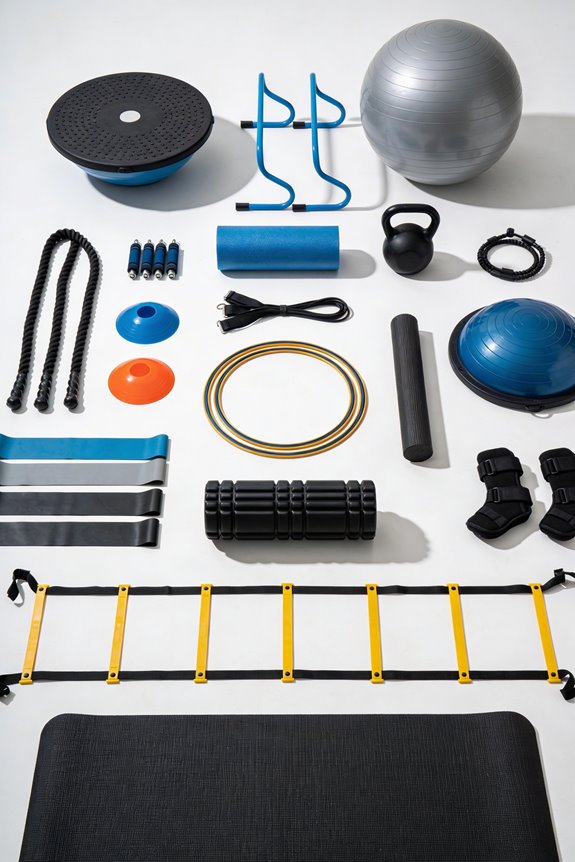

Lactic acid is produced when we engage in intense exercise, as our muscles switch to anaerobic metabolism, generating lactate. This lactate can be utilized as fuel by essential organs. However, muscle fatigue arises from the accumulation of lactate and hydrogen ions, alongside ATP depletion. We must manage lactic acid through proper nutrition, hydration, and recovery techniques like deep breathing and gradual intensity progression. By understanding these factors, we can better tackle fatigue and improve performance; more insights await ahead.
Key Takeaways
- Lactic acid is produced during anaerobic metabolism and serves as fuel for vital organs, not merely a sign of fatigue.
- Muscle fatigue results from a combination of lactic acid buildup, decreased blood flow, and mental fatigue rather than just lactic acid.
- Lactate clears from the body within 30 to 60 minutes post-exercise, while muscle soreness is primarily due to microtears in muscle fibers.
- Nutritional strategies like carbohydrate intake and hydration can help manage lactic acid levels and enhance recovery.
- Recovery methods, including active recovery and proper gear, can significantly improve performance and reduce fatigue after high-intensity workouts.
What Is Lactic Acid and How Is It Produced?
Ever feel that burning sensation in your muscles during a tough workout? It’s that moment when you’re pushing hard and suddenly you notice your muscles crying out for relief. That’s lactic acid doing its thing. But here’s the kicker: lactic acid is actually super important for your body’s energy production, especially when you’re working at full throttle.
When you’re sweating it out, your muscle cells switch to anaerobic metabolism to crank out energy fast, particularly when there’s not enough oxygen. During this process, glucose breaks down into lactic acid and lactate. So, when you feel that burn, it’s because lactic acid is stacking up in your muscles, making things a little more acidic.
Now, interestingly enough, as lactic acid loses a hydrogen ion, it changes into lactate, which is what your body prefers to use. So, why does this matter? Well, lactate isn’t just a waste product; it can actually provide energy to important organs such as your heart and brain.
Here’s the trick: don’t see lactic acid as just an enemy of your workout. It’s a critical player in how your body creates energy. You might find it helpful to think of it as fuel, rather than just a sign that you’re overdoing it.
In short, understanding lactic acid helps change the way we think about that post-workout burn. Instead of seeing it as a sign of fatigue, we can appreciate it as a vital part of our body’s energy system. Next time you feel those muscles burning, remember that it’s all part of the process. How do you plan on using this info to tackle your next workout?
For athletes like cyclists, using gel padded gloves can help reduce hand fatigue and improve endurance during those tough sessions that lead to lactic acid buildup.
Let’s Dive Deeper Into Muscle Fatigue

Ever hit the gym, felt pumped, but then suddenly your muscles just quit on you? That’s muscle fatigue, and it can be a real buzzkill for your workouts. The truth is, fatigue isn’t just your muscles waving the white flag; it stems from a mix of factors. When you’re pushing hard, lactic acid and hydrogen ions build up in your muscles. This makes it tough to generate force, and even simple tasks could feel like climbing a mountain.
And let’s not forget about your brain. Mental fatigue plays a big role here too. When you’re mentally drained, it affects your performance, showing just how connected your brain and body really are. So, what can you do to tackle both physical and mental fatigue? Pay attention to recovery, mix up your workout routines, and take breaks when needed.
Blood flow is another key player in muscle fatigue. When blood flow decreases, your muscles miss out on the oxygen they need, and guess what? That can lead to quicker exhaustion. The best part is that there are ways to improve your circulation, like staying hydrated and stretching regularly.
Another important factor to consider is the comfort and support provided by your workout gear, as wearing high-waisted leggings can improve blood circulation and muscle performance.
Understanding these elements can really help you manage your training. So next time you’re at the gym and feeling that fatigue hit, think of those factors. Keep it in mind, so you can maximize your workout without letting fatigue get the best of you.
Now, how are you planning to balance your workout intensity and recovery to keep muscle fatigue at bay?
The Myths: Debunking Lactic Acid and Muscle Fatigue

Muscle fatigue can be a real puzzle, can’t it? A lot of folks think that lactic acid is the main driver behind that exhausted feeling after a tough workout, but that’s actually a common misconception. Lactic acid is just a byproduct of how our bodies create energy when we’re pushing hard. Believe it or not, it doesn’t mess with muscle strength. Instead, what’s really going on has more to do with ATP depletion and inorganic phosphate.
You might notice that during those intense sessions, your body does produce more lactate. But here’s the catch—it gets cleared out in about 30 to 60 minutes afterward. So, why does this matter? It means that the burning sensation you feel is temporary and doesn’t lead to long-lasting muscle fatigue.
On another note, if you wake up sore after a tough workout, that’s not because of lactate buildup either. It’s actually due to microtears in your muscle fibers, which is all part of the muscle-building process. Try not to stress too much about lactate. Instead, focus on giving your muscles the rest they need.
Remember: muscle fatigue isn’t about lactate; it’s about how hard you pushed and what your body needs to recover. So, the next time you’re feeling wiped out after a high-intensity workout, know that it’s normal and there’s a whole lot more going on under the surface. The best part is you can make smart recovery choices to come back even stronger! What’s your go-to method for handling muscle fatigue? Using lightweight designs in your workout gear can also enhance comfort and ease of movement during exercise.
How Lactate Influences Performance During High-Intensity Exercise
Ever hit that point during a tough workout where you feel like you just can’t catch your breath? It’s probably because your body is running low on oxygen, and that’s when lactate starts to kick in as a byproduct of energy generation. But don’t let the bad rap fool you; lactate can actually help support your heart and brain while you push through those high-intensity moments.
A common misconception is that lactic acid is solely responsible for fatigue. Truth is, other factors—like levels of inorganic phosphate—play a much bigger role. So, what can you do about that post-workout soreness? Try incorporating active recovery strategies into your routine. Engaging in low-intensity workouts is a smart way to help clear that lactate from your blood, and it can seriously improve your recovery time.
Monitoring your lactate threshold can also be incredibly beneficial for your training. It informs you about how hard you can push yourself without hitting that wall, ultimately boosting your endurance for those challenging sessions ahead. Think about it: wouldn’t you want to know your limits so you can go further each time?
To wrap it all up, understanding lactate’s role can really change how you approach high-intensity exercise. So, next time you find yourself struggling, remember there’s more to the story. What’s your go-to strategy for tackling those tough workout moments? Additionally, just as stretch fabrics enhance mobility in ski pants, incorporating flexibility and mobility exercises can help improve performance and reduce fatigue during workouts.
Causes of Muscle Fatigue During Exercise
Ever hit the gym hard, only to feel that wave of fatigue wash over you? It can be frustrating, especially when you’re trying to push your limits. Let’s break down what causes muscle fatigue and how you can handle it.
One big reason you’re probably feeling wiped out is glycogen depletion. When those energy stores run low during intense workouts, your performance can take a nosedive. And let’s not forget about lactic acid—it builds up, along with inorganic phosphate and hydrogen ions, which can really mess with your muscle pH. This drop can leave you sore and tired.
But that’s not all we need to consider. Sometimes, your muscles don’t get enough calcium from the sarcoplasmic reticulum, which can slow down contractions and add to your fatigue. Ever wonder why you just can’t seem to lift that last rep? It might also be a case of central fatigue, driven by neurotransmitters like serotonin.
And here’s another kicker: when blood flow is restricted during those tough workouts, your oxygen supply takes a hit. Less oxygen means less force output, making it way easier to feel exhausted way before you’re ready to call it a day.
So, what’s the takeaway here? Find strategies to manage your energy levels and oxygen intake. Consider proper hydration, nutrition, and maybe even pacing yourself to see what works best for your body.
Using tools like muscle rollers can aid recovery and help alleviate soreness, enhancing your muscle performance over time.
Feeling fatigued after a good workout is normal, but understanding why can really help you adjust your routine. What strategies do you use to keep your energy up during tough workouts?
Nutritional Strategies to Manage Lactic Acid Buildup
Are you feeling that burning sensation in your muscles during high-intensity workouts? That’s lactic acid buildup, and managing it is key to boosting your performance.
To tackle this issue, you need to focus on proper fueling. Carbohydrates are your friends here since they help maintain glycogen stores in your muscles. You want to keep those energy levels up and minimize that unpleasant burning feeling.
Hydration is another critical aspect. Try to drink water before, during, and after your workouts. Staying hydrated helps your body recover faster by clearing out lactate more efficiently.
Here’s another tip: include foods rich in antioxidants in your meals. Berries and leafy greens are great options that can help combat oxidative stress related to high lactic acid levels.
Don’t forget about recovery! Incorporating active recovery methods, like low-intensity activities or stretching after exercising, can do wonders by promoting lactate clearance. It’s far more effective than just sitting still and waiting for your muscles to feel normal again.
Wearing moisture-wicking fabrics during exercise can also aid in maintaining comfort and reducing fatigue from lactic acid buildup by keeping sweat away from the skin, enhancing moisture management.
How to Clear Lactic Acid and Reduce Fatigue
Have you ever felt that burning sensation in your muscles after an intense workout? That’s lactic acid making its presence known, and if you want to clear it out and reduce that fatigue, you’ve got some options.
Try this: If you find yourself pushing too hard, consider dialing down your exercise intensity. Taking short breaks can do wonders for recovery. Engaging in active recovery—like going for a walk or doing some yoga—can really help flush out that lactate and keep you from feeling wiped out afterwards.
Here’s the trick: Incorporating deep breathing can seriously boost your oxygen intake. This increased oxygen flow helps your body in clearing out the lactic acid faster, which is key for feeling refreshed post-workout. And don’t overlook hydration; drinking plenty of water before and after your workout is crucial. It supports your body’s ability to manage lactic acid effectively.
So, why does this matter? Gradually ramping up your training intensity gives your body the chance to adapt. As you do this, you’ll find that you can handle lactic acid more efficiently, which means less overall fatigue when you’re really pushing hard.
Wearing compression socks can also promote better circulation, helping remove metabolic waste like lactic acid and enhancing recovery.
Tips to Prevent Excessive Lactic Acid Accumulation During Workouts
Are you tired of feeling that burning sensation in your muscles during workouts? Let’s talk about how to keep lactic acid from piling up when you’re sweating it out. There are a few strategies that can really help you perform better and feel more comfortable during those tough sessions.
First, slowly increasing your workout intensity and duration can make a significant difference. Your body needs time to adapt, and this approach helps in clearing out lactic acid more effectively.
Interval training is another smart way to go. By mixing high-intensity bursts with periods of rest, you’re raising your lactate threshold, which is a fancy way of saying you’ll be able to push harder for longer without feeling like your muscles are on fire.
Don’t forget about fueling your body before you hit the gym. Grab some carbs, protein, and healthy fats to ensure you have enough energy and keep your muscle glycogen up. You’ve got to give your body what it needs to perform its best.
Staying hydrated during your workouts is crucial. Think about it: proper fluid intake keeps your blood flowing smoothly, which helps your body clear out lactic acid. Pour yourself a glass and sip it throughout your training.
Active recovery is where it’s at post-exercise. Activities like walking or practicing yoga can boost your circulation and speed up lactate removal from your muscles. It’s a simple yet effective way to feel better after a tough workout.
Choosing the right gear, such as breathable fabrics, can also help regulate your body temperature and reduce discomfort during intense exercise.
To wrap it up, managing lactic acid can enhance your workouts and recovery. So, what strategies are you going to try next time you hit the gym?
Frequently Asked Questions
Can You Exercise Effectively Without Lactic Acid?
By utilizing alternative energy sources and respecting our aerobic threshold, we can enhance training intensity. This leads to better muscle adaptation, engaging different energy systems and metabolic pathways for effective exercise without relying solely on lactic acid.
How Does Hydration Affect Lactic Acid Levels?
Hydration’s essential for managing lactic acid levels; adequate water intake and electrolyte balance help prevent dehydration effects. By using effective hydration strategies, we can enhance our performance and support ideal muscle function during exercise.
Is There a Safe Limit for Lactate During Exercise?
There isn’t a strict safe limit for lactate during exercise, but knowing our lactate threshold helps optimize muscle performance. Managing fatigue through varying exercise intensity supports better metabolic responses and encourages positive training adaptations.
How Does Lactic Acid Impact Endurance Training?
Lactic acid influences our endurance training by informing lactic threshold training and enhancing fatigue resistance. We can adopt endurance adaptation strategies, implement high intensity workouts, and use muscle recovery techniques and lactate clearance methods for peak performance.
Can Active Recovery Help in Clearing Lactic Acid?
Yes, active recovery can help clear lactic acid by boosting blood circulation, reducing muscle soreness, and enhancing overall recovery techniques. This approach is essential for managing exercise intensity and improving our lactic threshold effectively.