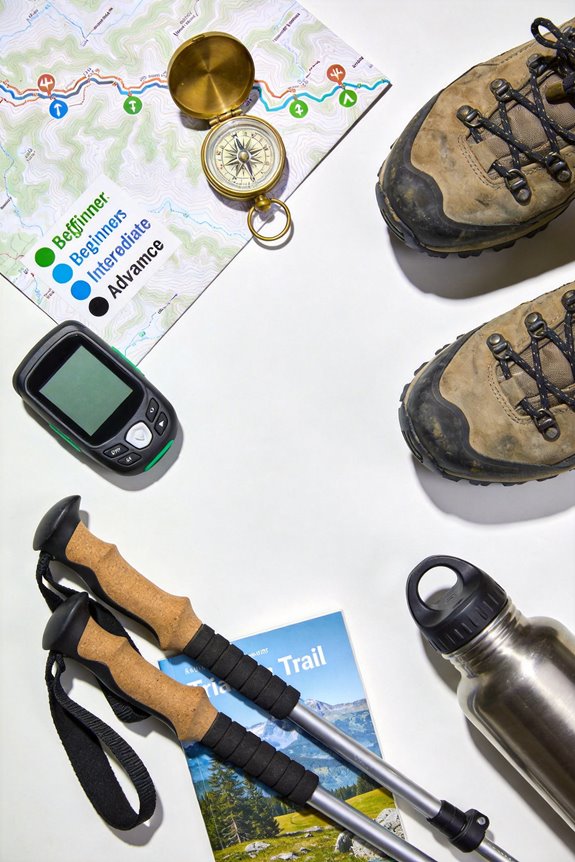

Understanding trail difficulty ratings is vital for our hiking safety and enjoyment. We consider elevation, terrain, and distance: easy trails have under 250 feet elevation change, moderate ranges from 250 to 500 feet, and strenuous exceeds 750 feet. Longer trails increase demands, while steep grades add complexity. To assess difficulty, we can use the formula: Elevation Gain x 2 x Distance. This helps in picking the right hike for our skill level. More tips on preparation follow.
Key Takeaways
- Trail difficulty is categorized as easy, moderate, or strenuous, based on elevation, terrain, and distance.
- Easy trails typically have less than 250 feet elevation gain and max out around 3 miles.
- Strenuous trails often exceed 4 miles and have elevation gains over 750 feet, testing endurance.
- Assess your fitness level and pace to choose trails that match your capabilities and avoid overexertion.
- Always check weather conditions and plan accordingly to ensure a safe and enjoyable hiking experience.
How to Choose the Right Hike for Your Skill Level
Choosing the right hike can feel like a puzzle sometimes. You want the experience to be enjoyable, but if you pick a trail that’s too tough, it can turn into a real struggle. So how do you know which hike is perfect for you?
First things first, check out the trail difficulty ratings. If you’re relatively new to hiking, look for trails that are somewhere between 2-4 miles long with an elevation gain of 250-500 feet. These hikes will help you build confidence without pushing you too hard.
Consider the time, too. Easy trails usually take just a few hours to complete, while more difficult ones might steal an entire day from your schedule. So, what’s the trick for knowing if you’re up for a particular trail? You can use a simple formula: Elevation Gain x 2 x Distance. This can help you figure out the trail’s difficulty rating. It really makes a difference when you’re trying to select a hike that won’t leave you huffing and puffing.
I get it, you might be thinking, “Isn’t it okay to just wing it?” Honestly, that can lead to some rough experiences. Having a good understanding of the trail’s difficulty can ensure you gradually build your endurance, letting you tackle tougher routes as you get more seasoned.
To wrap it up, choose a hike that matches your current skills and keep building them from there. What’s your favorite way to prepare for a hike?
Additionally, wearing appropriate gear such as insulated vests can help maintain your warmth and comfort during colder hikes.
Understanding Trail Difficulty Ratings: Elevation, Terrain, and Distance

Understanding Trail Difficulty Ratings: Elevation, Terrain, and Distance
Ever hit the trail only to find out it’s way more intense than you expected? Knowing how trail difficulty ratings work can save you from some serious regrets. Let’s break down the three major factors: elevation, terrain, and distance.
Elevation is a biggie. Trails that change less than 250 feet in elevation are labeled easy, making them perfect for beginners or folks who just want a leisurely stroll. Think about it—if you’re new to hiking, you probably don’t want to tackle a mountain right away. Now, moderate trails come into play for those who feel a bit adventurous; these usually have an elevation gain of 250 to 500 feet and are typically around two to four miles long. If you’re looking for something that really gets your heart pumping, strenuous trails usually exceed a 750-foot elevation gain and tend to span more than four miles.
So, why does this matter? You need to consider the elevation gain relative to the distance of the trail. A trail with a high elevation gain over a short distance is going to be a tougher hike. This means you’ll want to assess your fitness level and experience before diving into a strenuous route.
Here’s a quick run-down:
- Easy Trails: Elevation change under 250 feet; perfect for beginners.
- Moderate Trails: Elevation gain of 250 to 500 feet over two to four miles; good for those ready to level up.
- Strenuous Trails: Elevation gain over 750 feet; challenging and not for the faint of heart.
Frankly, understanding these ratings can help you choose trails that are right for you. Nothing beats enjoying the hike without worrying if you’ve bitten off more than you can chew.
To sum it up, check the elevation gain, match it to the distance, and make smart choices based on your ability. Including proper muscle recovery tools after your hike can also ensure your body heals effectively for your next adventure. What trails are you thinking of trying out next?
Factors That Affect Hiking Difficulty: Key Influences Explained
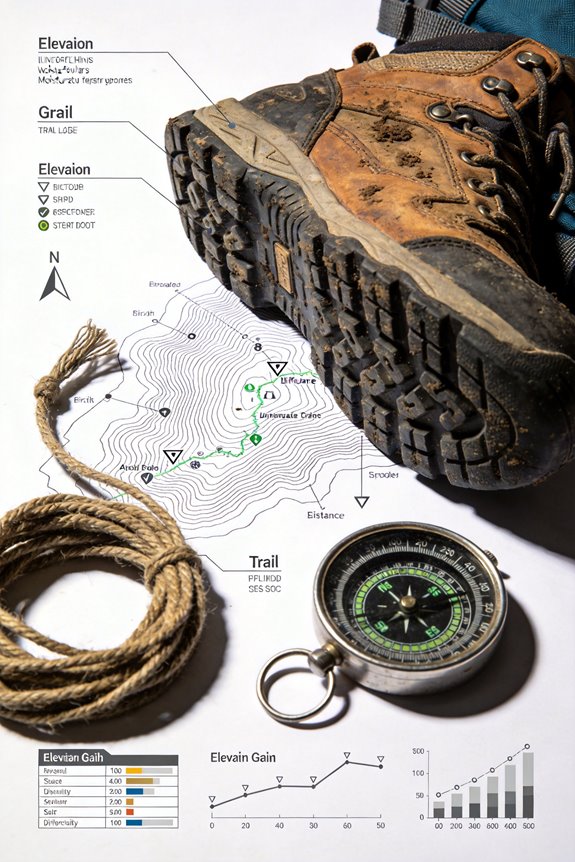
Ever wondered why some hikes leave you feeling like you’ve just climbed a mountain while others feel like a casual stroll? Understanding trail difficulty ratings is your key to figuring out what makes a hike really challenging.
One major factor is elevation gain. Trails that have more than 1,000 feet of gain per mile are generally considered tough. Think about it—those uphill stretches can really test your endurance and strength. So, if you’re eyeing a trail that looks steep on the map, be prepared for quite a workout.
Distance plays a big role, too. The longer the trail, the more demanding it can get, especially if you’re dealing with steep grades over 25%. A long hike can feel like a marathon, especially if you’re not pacing yourself. Remember, it’s not just about reaching the end but also about how you feel along the way.
Environmental factors can throw a wrench in your plans as well. Harsh weather, whether it’s scorching heat, relentless rain, or a bit of snow, can seriously ramp up the challenge. So, when planning your hike, always check the forecast. You don’t want to be caught off guard and find the elements affecting your enjoyment.
On top of all that, there’s also the logistics of your hike to consider. The weight of your pack matters more than you might think. A heavier load can cause fatigue and slow you down, especially if you’re hiking with a larger group. If you’re tackling a tough trail with pals, being mindful of everyone’s pace and energy levels can make a big difference in how enjoyable the trek is.
Additionally, wearing nylon hiking pants can improve comfort and mobility, helping you handle challenging terrain more easily.
In the end, understanding these factors can help you prepare for your next hiking adventure. So when you’re planning your next trip, consider what makes a trail tough and make sure you’re ready for the challenges ahead. What’s your go-to strategy for tackling difficult trails?
Calculating Hiking Difficulty: A Step-by-Step Guide
Calculating hiking difficulty might feel a bit daunting at first, but it doesn’t have to be. Let’s break it down in a way that makes sense. The formula is pretty straightforward: you take the elevation gain, multiply it by two, and then multiply that by the distance in miles. For example, if you’ve got a trail with a 2,200-foot elevation gain over 10 miles, you’d calculate a difficulty rating of about 209.8.
So, where does that number fall on the scale? Anything under 50 is considered easy, while a score over 200 means you’re looking at a very strenuous hike. Why does this matter? Because it gives you a clearer picture of what to expect on the trail, helping you prepare your body and mind.
Now, you might wonder how long you’re going to be out there hiking. On average, moderate hikes see you moving at roughly 1.5 miles per hour. When it gets tough—like the very strenuous trails—you can expect that pace to drop to around 1.2 miles per hour. Keep in mind that if a trail has over 1,000 feet of elevation gain per mile, you’re signing up for something quite challenging.
The best part is, understanding these numbers can help you choose hikes that match your ability and stamina. So before heading out, take a moment to assess the trail’s difficulty using that calculation. It’s all about making smart choices for a safe and enjoyable hike. Curious about which trails might suit your skill level? Look into local guides or apps that can provide specifics on elevation and distance. Using lightweight hiking pants designed for comfort and durability can also enhance your experience on difficult hikes. Happy hiking!
Preparing for Your Hike: Helpful Tips and Tools
When planning a hike, have you ever found yourself wondering how to prepare properly? Getting ready is essential for staying safe and enjoying every step of the journey. Start by assessing the trail’s difficulty with a simple formula: Elevation Gain x 2 x Distance. This little trick is a lifesaver, especially for beginner hikers like you.
Next, grab the NPS app to check out current trail conditions and navigation maps. It’s super handy to know what to expect before you go. You’ll want to get familiar with hiking difficulty ratings too. They usually range from easier trails (those with a difficulty score under 50) to very strenuous ones (that score over 200). So, why does this matter? Knowing these ratings helps you pick the right hike for your skill level.
Don’t forget to plan your average pace. On easy trails, you can expect to cover about 1.5 miles per hour, while on tougher hikes, it’s more like 1.2 miles per hour. This makes it easier to set a realistic timeline based on your fitness level and the trail’s condition.
To protect your skin during outdoor activities, consider wearing clothing with a high UPF rating to reduce UV exposure.
The best part? Being well-prepared helps you focus on enjoying the hike instead of stressing over the little things. So, whether you’re new to hiking or getting back into it, take the time to prepare right, and you’ll be ready to hit those trails confidently.
Before you head out, keep this in mind: preparation makes all the difference in having a great outdoor adventure. What hike are you considering next?
What Ratings Should Beginners Look For?
Choosing the right trail rating can really make or break your hiking experience, especially if you’re starting out. If you’re a beginner, look for trails labeled as “Easy.” These usually max out around 3 miles and have an elevation gain of less than 250 feet. That means you’ll find the hike manageable, and you won’t feel overwhelmed.
If you’re feeling a little more adventurous, trails rated as “Moderate” might work too. They generally range from 2 to 4 miles, with elevation changes of 250 to 500 feet. So, why does this matter? You want to enjoy the hike, not struggle through it. Stick to well-marked paths with gentler slopes to keep things clear and straightforward.
You might be wondering about your speed. Pacing yourself at around 1.5 miles per hour on easier trails helps you plan your hiking time better. This way, you’re more likely to have a fun outing without rushing or exhausting yourself.
To stay comfortable during your hike, consider wearing lightweight and waterproof gear like rain pants with breathable membranes that manage moisture effectively.
To recap, aim for easy trails if you’re just starting out. If you want something a bit tougher, moderate trails can be great too. What trail will you choose for your next adventure?
Frequently Asked Questions
How Can Weather Conditions Impact Trail Difficulty Ratings?
Weather impacts trail accessibility considerably; rain or snow can make trails slippery and harder. We should always take safety precautions and assess conditions before heading out, ensuring we’re prepared for whatever nature throws our way.
Are There Universal Ratings for Trails Across Different Regions?
No, there aren’t universal trail ratings due to regional differences. Rating systems vary, often lacking standardized criteria, which can confuse us hikers when comparing experiences. We should always research local ratings before hitting the trails.
What Resources Provide Updated Trail Ratings and Conditions?
When we seek clarity on trails, we turn to trail rating websites, trusty hiking apps, lively outdoor forums, and reliable government agencies; these resources weave together a tapestry of updated conditions and ratings for us adventurers.
How Can I Find Less Crowded Trails With Similar Ratings?
We can find less crowded trails by seeking hidden gems shared through local advice. Utilizing trail apps and community forums helps us discover paths that match our preferred ratings while avoiding the popular, crowded spots.
Do Trail Ratings Consider Seasonal Changes in Trail Conditions?
Yes, trail ratings often consider seasonal conditions, including terrain variations and weather forecasts. We should stay informed about trail maintenance updates for the best experience, as conditions can change greatly with the seasons.