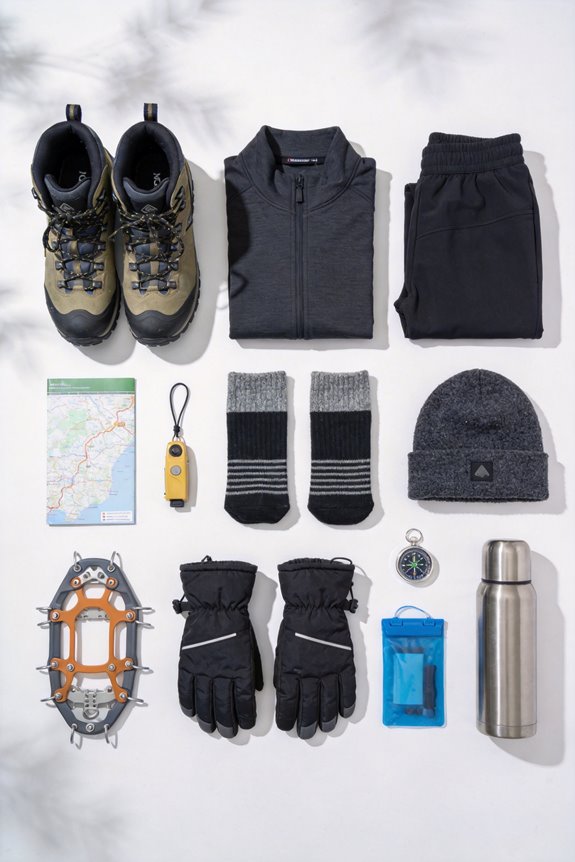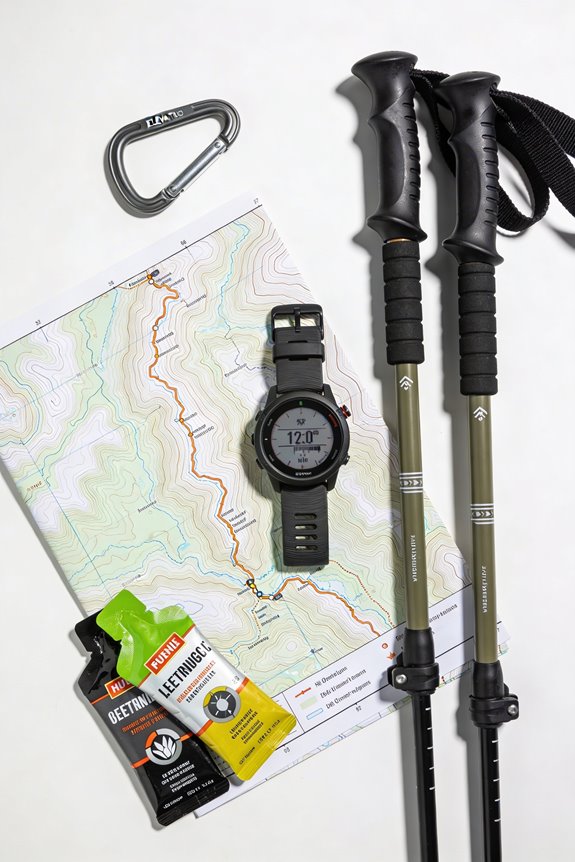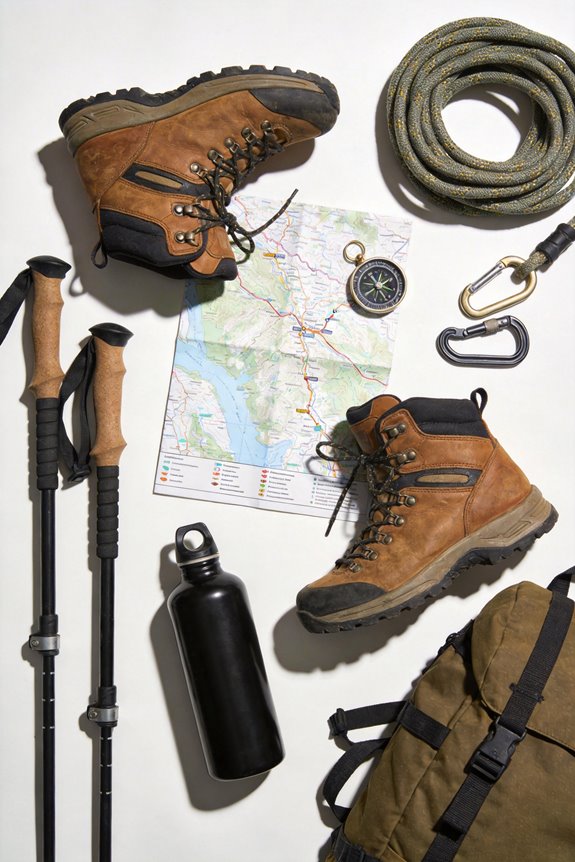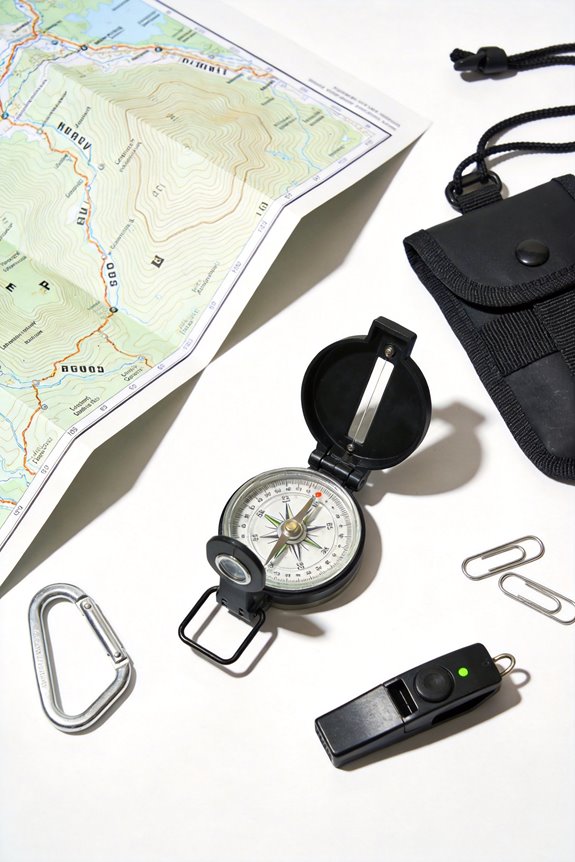

To navigate using a map and compass, we need essential tools: a reliable map and a compass with a magnetic needle and direction of travel arrow. First, align the map with north and the compass. Next, practice reading topographic maps to understand elevation changes. We can take bearings by lining up the compass with our starting point and destination. As we explore, we should regularly check for landmarks and adjust our course to stay on track; there’s more to explore.
Key Takeaways
- Always start with a reliable map oriented with north at the top for effective navigation.
- Use a compass to take bearings by aligning it with your starting point and destination.
- Familiarize yourself with topographic maps to understand elevation changes and terrain features.
- Practice counting paces to track distance and verify your route against visible landmarks.
- Regularly check your compass and map to adjust for any changes in your surroundings.
Essential Navigation Skills: Tools for Map and Compass
Let’s talk about navigation for a minute. Ever found yourself lost in the woods or unsure of which trail to take? Having the right tools, like a reliable map and a good compass, is key for finding your way. A compass has some important parts: the magnetic needle, the base plate, and the direction of travel arrow. Each of these helps you take a bearing and stay on track.
First off, let’s dive into using a topographic map. It’s like having a cheat sheet for the landscape, showing landmarks and elevation changes. Here’s the trick: practice aligning your map with your compass. You want to get those orienting lines to match up with magnetic north. Once that’s done, measuring the distance on your map becomes a breeze, making route planning much easier.
Taking a bearing is where the magic happens. It’s about determining the right heading in degrees from north. With this information, you can confidently make your way to your destination, guided by your trusty map.
So, why does all this matter? Because it’s not just about getting from point A to point B; it’s about enjoying the journey and knowing you can find your way, no matter what. Honestly, if you take the time to master these skills, you’ll feel more secure on your adventures. Wearing breathable fabrics can help keep you comfortable during strenuous outdoor activities like navigation.
Navigating Terrain Challenges With Confidence
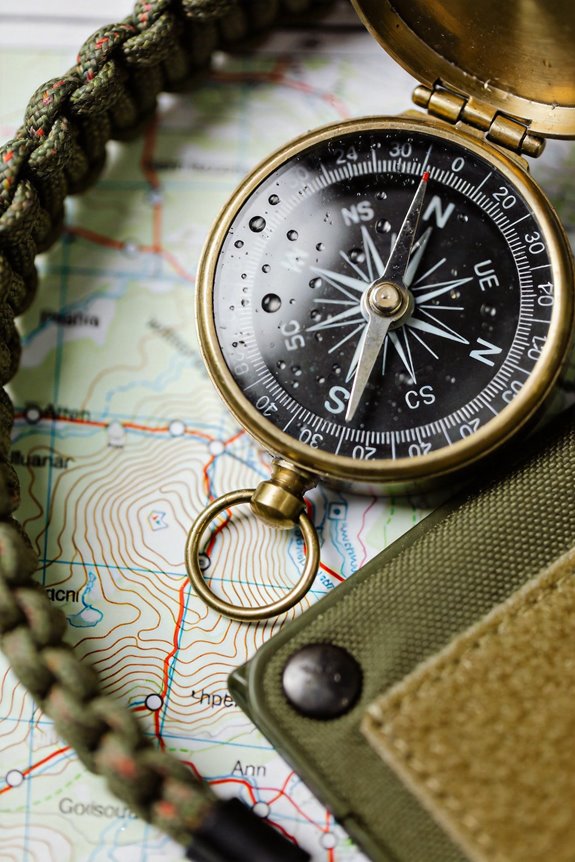
Maneuvering through tough terrain can seem like a daunting task, can’t it? But with a few handy techniques and the right mindset, you can tackle it like a pro. One of the best ways to get through obstacles like trees and hills is to use topographic maps. They let you estimate routes while keeping your bearing straight, so you don’t end up going in circles.
Try this: implement “right angle navigation.” This is a nifty trick that helps you skirt around barriers while maintaining your direction. Counting your paces while you’re deviating from your route is a good idea too. This way, you can keep track of how far you’ve traveled and stay on point.
Also, don’t forget to look ahead. Spotting visible landmarks that align with your compass bearing is crucial—they’ll confirm you’re on the right track and help you make adjustments if necessary. Truth is, getting a good grip on the terrain features through practice in different areas will boost your confidence. Each time you venture out, it’ll become easier, making your outdoor experiences more enjoyable and successful. For added protection and comfort during your adventures, consider wearing waterproof rain pants designed for durability and breathability.
Master Map Orientation and Reading Techniques
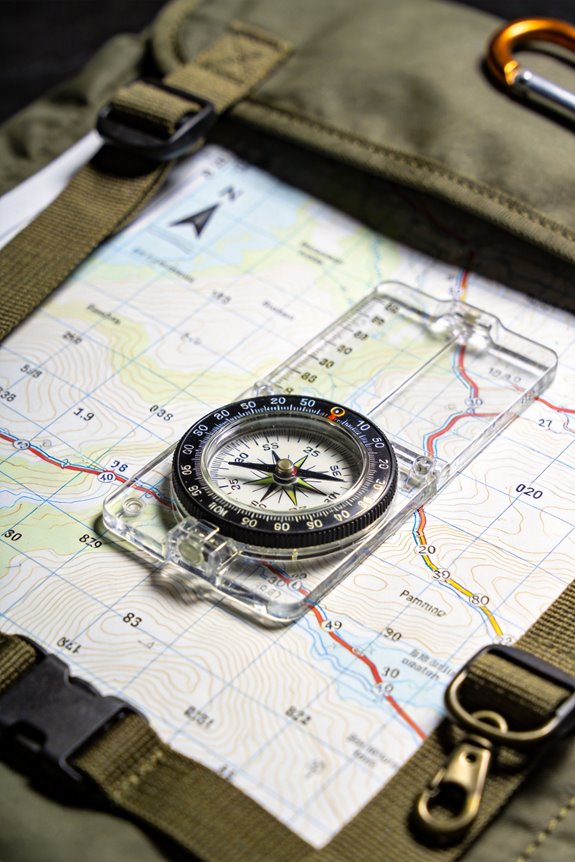
Map orientation is an essential skill for anyone who loves to explore the great outdoors. Have you ever found yourself lost while trying to navigate a trail? It’s a frustrating experience. To get started, lay your map flat in front of you, making sure that north is at the top. Grab your compass and align the needle with the orienting arrow so you can pinpoint true north.
Familiarizing yourself with contour lines and key map components like the compass rose, scale, and legend will really help you grasp the lay of the land. So, why does this matter? Understanding these elements can make all the difference when you’re out there trying to find your way.
Take a moment to visualize the landmarks on your map and correlate them with what you see in the real world. This isn’t just about reading symbols; it’s about connecting the map to your surroundings. Try this: When you’re looking for your destination, use the compass dial to point the direction of travel arrow toward it. This simple step will keep you on the right path.
The best part is that these basic map and compass skills not only boost your confidence but also enhance your entire navigation experience. Routes will feel clearer, and you’ll begin to trust your instincts more as you explore new areas.
In addition, having reliable waterproof and breathable rain gear ensures you stay dry and comfortable, so weather won’t hinder your navigation efforts in the outdoors.
In the end, developing these skills can be quite rewarding. It’s all about feeling empowered when adventure calls. So, what’s your next destination?
Take and Follow the Right Bearings
Have you ever found yourself wandering in the woods, unsure of which direction to head? Taking the right bearings is crucial when you’re trying to navigate. The last thing you want is to get lost when you’re just trying to enjoy a day outdoors.
So, how do you take a bearing? Start by lining up the edge of your compass with your starting point and your destination. Make sure that the direction of travel arrow points straight toward where you want to go. Then, twist the compass housing until the orienting lines line up with the north-south lines on the map. This helps the magnetic needle settle into the correct position. It sounds a bit complicated, but with practice, it becomes second nature.
Once you’ve got your bearing, it tells you exactly where you need to head. But don’t forget, as you walk, keep an eye out for visible landmarks. They can be a good way to confirm you’re on the right path. And it’s smart to check your map every so often. If things start to look off, a quick adjustment can keep you on track.
Honestly, even if you think you know the way, things can always change. Weather, trails, and other factors can alter your route. Taking regular checks reassures you that you’re headed in the right direction, which can make all the difference in your planning. Using gear designed for visibility enhancements can also improve safety when navigating in low-light or nighttime conditions.
Apply Your Navigation Skills on Outdoor Adventures
Ever found yourself out in the wild, clutching your phone, only to realize there’s no signal? It’s a common issue, and that’s where knowing how to navigate using a map and compass comes in handy. You can enhance your outdoor experience by teaching yourself some solid navigation skills.
Start by grabbing a topographical map of the area. These maps aren’t just for looks; they show you elevation, terrain features, and hazards that could pop up on your hike. Drawing lines from where you are to at least two landmarks can help you get your bearings and improve your accuracy. Don’t forget to orient your map with magnetic north—you’ll be surprised how much easier that makes your journey.
Triangulation is another handy skill to have up your sleeve. By spotting two known landmarks, you can pinpoint your location on the map. It’s honestly one of those skills that feels great to master. The best part? Regularly practicing with your compass and map doesn’t just build your confidence; it also prepares you for when tech decides to take a vacation.
Remember, just like selecting the right gear, mastering practical designs ensures effectiveness and safety during your adventures.
So, why does this matter? Because outdoor adventures should be fun, not stressful. Having these navigation skills in your toolkit means you’re more likely to stay safe and make the most out of your time exploring.
Frequently Asked Questions
What Are the 4 D’s of Navigation?
The 4 D’s of navigation are determining our position with landmarks, defining our destination clearly, deciding direction using compass adjustments, and estimating distance with terrain features, while considering weather impacts and visibility during route planning.
How to Use Maps to Navigate?
To use maps for navigation, we’ll study topographic maps and map legends, interpret scales, recognize map symbols, analyze contour lines, and plan our routes while familiarizing ourselves with the area and utilizing navigation tools effectively.
How to Navigate Direction on Compass?
To navigate with a compass, we align compass readings with cardinal directions, account for magnetic declination, and practice field calibration. With strong orientation skills and proper route planning, we can enhance our advanced navigation using various compass types.
What Are Three Ways You Can Use Maps and How Are Maps Helpful?
Using maps is like discovering a treasure map; we can identify topographic features, estimate distances accurately, and plan routes effectively. They enhance our terrain analysis, landmark identification, and even understanding elevation changes with scale interpretation and map symbols.